Blog
Why Do You Need a Check Valve?
A Check Valve may look like a small fitting, but its failure can send water, oil, or compressed air backward through a system. That can damage pumps, disturb process control, and trigger water hammer. The risk is easy to miss: a valve can be correctly installed and still perform poorly if its type, size, or closing behavior does not match the flow conditions.
The U.S. Department of Energy’s Improving Pumping System Performance sourcebook reports that pumping systems account for nearly 20% of global electricity demand. That figure is not a measure of check-valve savings; it shows why dependable flow management matters across energy-intensive systems. Valve Handbook author Philip L. Skousen offers a useful engineering perspective: in paraphrase, reverse-flow protection depends on selecting a valve suited to the system, not merely fitting one into the line. A spring-assisted model, for example, may close differently from a swing check when flow slows. Small details matter. So does maintenance.
This guide explains when a Check Valve is needed, how it prevents reverse flow, and what to consider when choosing one. It also looks at common trade-offs, including pressure loss, installation orientation, and the risk of slam. A check valve is not a cure-all. Real systems vary, and operating data should inform the choice. That is worth remembering.
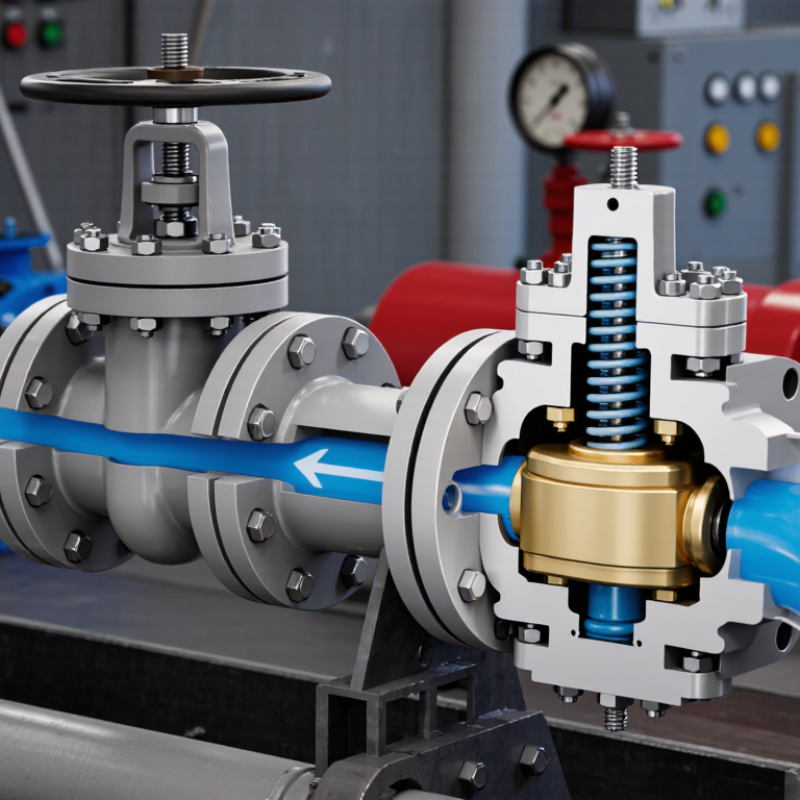
What Is a Check Valve?
A check valve is a mechanical device that allows fluid to flow in one direction and restricts reverse flow. Unlike a hand-operated valve, it responds automatically to changes in pressure or flow. When forward pressure drops, an internal part—often a disc, ball, or flap—moves back toward its seat. No handle is needed.
The exact movement depends on the design. A swing check uses a hinged disc. A spring-loaded model may close quickly, while a lift check moves along a guide. The right choice depends on the fluid, pressure, pipe layout, and operating conditions. In a pump line, a check valve can limit reverse flow when the pump stops.
It may help protect pumps and other equipment, but it is not an isolation valve. A worn seat can still let fluid slip backward. Not foolproof. Sizing and installation matter, too. It is tempting to treat check valves as simple safeguards, yet real piping systems are rarely so tidy. Check technical specifications and inspect the valve according to its service conditions.
How Does a Check Valve Work?
Why Do You Need a Check Valve? How Does a Check Valve Work?
A check valve allows fluid to travel in one direction and resists flow in the opposite direction. Inside, a disc, ball, or flap responds to pressure from the moving fluid. When upstream pressure is strong enough, the moving part lifts or swings open. Fluid passes through. When flow slows or reverses, the part returns to its seat and blocks the path. No manual lever is needed.
Small pressure changes matter. In a household water line, forward flow may push a spring-loaded disc aside. If pressure drops, the spring helps close the valve. Other designs rely on gravity, so their position during installation matters. A valve fitted backward can restrict flow or fail to prevent reverse movement. Check the flow arrow and installation instructions. It’s easy to miss.
Closure is not always silent. A fast-moving column of water can make a valve snap shut, causing a pressure surge or tapping noise. This is called water hammer. The right valve depends on the fluid, flow rate, pressure, and piping layout; one design does not suit every system. In real installations, performance can be less tidy than a diagram suggests. debris, wear, or a damaged seat may prevent a tight seal, so inspection and maintenance still matter.
Why Do You Need a Check Valve? - How Does a Check Valve Work?
| Topic | How It Works | Why It Matters |
|---|---|---|
| Basic purpose | A check valve allows fluid to flow in the intended direction and closes when flow reverses. | It helps prevent reverse flow that could damage equipment, contaminate a supply, or disrupt a process. |
| Opening action | Forward-flow pressure moves an internal element—such as a disc, ball, or plate—away from its seat. | The valve opens automatically; it generally does not require a handwheel or external actuator. |
| Closing action | When forward flow stops or reverses, the moving element returns to the seat. Gravity, a spring, or reverse pressure may assist, depending on the design. | Prompt closure can reduce reverse flow, though closure speed and effectiveness depend on the valve and system conditions. |
| Swing check valve | A hinged disc swings open with forward flow and swings back toward the seat as flow slows or reverses. | Often used in larger pipelines where the layout and operating conditions suit a swinging closure element. |
| Lift check valve | A disc or piston lifts from its seat under forward pressure and returns to the seat when that pressure falls or reverses. | Commonly selected for applications where its guided, linear movement and installation arrangement are appropriate. |
| Ball check valve | A ball moves away from the seat to permit forward flow and returns to the seat to restrict reverse flow. | Its suitability depends on the fluid, solids content, orientation, and the valve’s specific construction. |
| Typical uses | Check valves are used in systems such as pump discharge lines, water and wastewater piping, and process piping. | They can help prevent a pump from being driven backward by returning fluid and help isolate flow direction between system sections. |
| Installation considerations | Install in the direction indicated by the flow arrow and follow the manufacturer’s instructions for orientation and support. | Some designs are orientation-sensitive. Incorrect installation can prevent proper opening or closing. |
| Important limitation | A check valve is designed for one-way flow, not for precise flow regulation or dependable manual isolation. | It may not provide a perfectly leak-tight seal. Use a suitable isolation valve where positive shutoff is required. |
| Selection factors | Consider fluid type, pressure and temperature ratings, flow conditions, connection size, installation position, and closure characteristics. | Correct selection helps ensure the valve is compatible with the system and reduces the risk of excessive pressure loss or damaging closure effects. |
Note: Check-valve performance varies by design and operating conditions. Confirm material compatibility, ratings, and installation requirements against the valve’s technical documentation.
How Does a Check Valve Prevent Backflow?
A check valve lets liquid or gas move in one direction and closes when flow reverses. It works automatically, without a person turning a handle. When pressure pushes fluid forward, a disc, ball, or flap lifts from its seat. If the pump stops or downstream pressure rises, reverse flow pushes that moving part back against the seat. That is the basic action. A spring may help it close quickly, while some designs rely mainly on gravity and fluid pressure.
This closure can protect a pump from reverse rotation, limit drain-back in a pipe, or help keep contaminated water from flowing into a clean supply. Picture a pump switching off: without a working valve, water in a raised pipe may fall back and strain the system.
Small details matter. A valve must suit the fluid, pressure, temperature, and flow rate; an unsuitable model may chatter, leak, or restrict flow. Installation direction matters too. An arrow on the body usually indicates permitted flow, but checking the maker’s instructions is safer than guessing. A check valve is not a perfect seal, and debris or wear can prevent full closure. It is easy to assume that fitting one solves every backflow problem. In reality, placement and regular inspection still matter.
Where Are Check Valves Commonly Used?
Check valves are common wherever fluid should move in one direction. At a pump discharge, they help prevent water from flowing backward when the pump stops. That protects equipment and reduces pressure surges. In municipal water networks, they appear near pumps, storage tanks, and treatment equipment. The USGS reported that public water supplies withdrew about 39 billion gallons per day in 2015. That volume shows why dependable flow control matters across thousands of systems.
Wastewater lift stations use check valves to limit reverse flow through pump lines. A valve may sit in a damp, cramped chamber, where grit and debris can affect its operation. Inspection matters. The U.S. EPA’s 2023 Drinking Water Infrastructure Needs Survey estimated $625 billion in drinking-water infrastructure needs over 20 years. That figure is not a valve-spending estimate, but it reflects the scale of systems that depend on reliable piping and components.
Check valves also serve heating and cooling loops, fire-protection piping, and industrial process lines. In a boiler room, they can help stop hot water from circulating in the wrong direction. In a process plant, they may protect pumps from backflow between operating cycles. Their location should match the flow path and operating conditions; one valve type will not suit every service. Still, placement can be overlooked. A valve that is difficult to inspect may fail unnoticed.
What Factors Guide Check Valve Selection?
A check valve allows fluid to move in one direction and helps limit reverse flow when a pump stops. That can reduce backspin, pressure disturbances, and contamination risks in a line. Selection starts with the actual service, not just pipe size. Identify the fluid, its temperature, operating pressure, and flow rate. Water, oil, and abrasive mixtures behave differently inside a valve. Direction matters.
Next, compare the valve’s pressure drop with the system’s available pressure. An undersized or poorly matched valve may restrict flow. A valve that opens too easily can chatter when flow is low, causing noise and wear. Check the cracking pressure, the minimum pressure needed to open the valve, against the pump’s performance. Also consider installation position: some designs depend on gravity, while others can work in horizontal or vertical piping. Check the manufacturer’s orientation and operating limits.
Choose the closing mechanism for the consequences of reverse flow. A spring-assisted design may close quickly, while a swing design can suit steadier flow with less restriction. The best choice is not always obvious. A calculation may miss short start-up surges or changes in fluid behavior. Review the expected operating range, available maintenance access, and the cost of a leak or shutdown. Then confirm the selection against reliable technical data and, where conditions are uncertain, a qualified engineer’s review.
Article Source:
Exclusive Access
Unlimited Resources
Detailed information on our products to assist you with the planning of your cable management project
Register Now