Main menu Open search

Blog

What Makes China the Best PV Cable Harness Supplier?

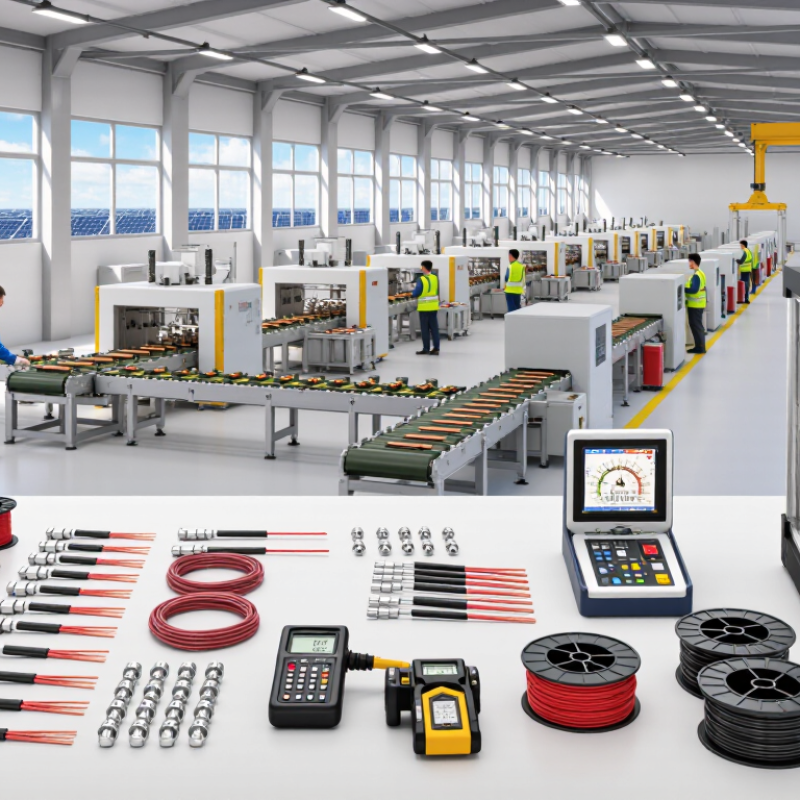
What makes China the best PV Cable Harness supplier is not simply its manufacturing scale. The stronger argument lies in its complete solar supply chain, engineering depth, and experience with high-volume production. Chinese manufacturers often coordinate cable materials, connectors, crimping equipment, testing systems, and packaging under one industrial network. This structure can shorten lead times and improve production consistency. It also supports customized harness lengths, connector types, and labeling requirements for different photovoltaic projects.

A reliable PV Cable Harness supplier must prove performance beyond a product brochure. Experienced manufacturers inspect conductor quality, insulation thickness, crimp strength, connector engagement, and electrical continuity. They may also conduct voltage, temperature, aging, and water-resistance tests before shipment. Clear inspection records matter. So does traceability. Buyers should request samples, factory evidence, technical drawings, and relevant certifications before signing a large order. Small details can prevent expensive installation delays.

China also offers competitive pricing without making quality the only discussion. Skilled suppliers can support automated assembly, stable material sourcing, and flexible production volumes. Yet the “best” supplier is not always the cheapest one. That assumption needs reconsideration. Communication gaps, inconsistent documentation, or weak after-sales support can create hidden costs. The most dependable partners combine engineering knowledge, transparent quality controls, responsive service, and verified project experience. Their value becomes visible in the field, where every connection must withstand sunlight, heat, moisture, and years of electrical stress. That is where reliability truly matters.

What Makes China the Best PV Cable Harness Supplier?

PV Cable Harnesses: Definition, Structure, and Role in Solar Systems

What Makes China the Best PV Cable Harness Supplier?

A PV cable harness is a pre-assembled cable set connecting modules, junction boxes, inverters, and batteries. Its structure usually includes solar-rated conductors, insulation, connectors, seals, and strain-relief parts. These details matter. A loose crimp can create heat, resistance, and eventually a fire risk. In 2023, global solar capacity reached about 1,419 GW, according to IEA PVPS Trends 2024. This rapid expansion increases demand for consistent harnesses, not simply low-cost cables.

China is a leading PV cable harness supplier because its manufacturing base supports large-volume production, copper processing, connector assembly, testing, and logistics. Suppliers can often coordinate these stages within one industrial network. That improves delivery control and design flexibility. Professional factories typically verify conductor resistance, insulation performance, polarity, pull strength, and weather resistance. IEC 62930 and EN 50618 provide important references for photovoltaic cable performance. Still, “best” depends on application. A harness designed for a rooftop may fail in a desert installation. The assumption is easy to miss.

Tips: Check cable cross-section, temperature rating, connector compatibility, and certification records before ordering. Request sample testing and traceable inspection data. Do not judge quality by appearance alone. Field experience shows that connector fit is often more important than polished packaging. IRENA reported solar accounted for 73% of renewable capacity additions in 2023. Reliable harnesses help protect that investment by reducing connection losses, maintenance visits, and unexpected downtime. Even careful designs need review.

What Makes China the Best PV Cable Harness Supplier?

PV Cable Harnesses: Definition, Structure, and Role in Solar Systems

A PV cable harness is a pre-assembled electrical connection set that combines photovoltaic cables, connectors, terminals, branch connectors, and protective components. It links solar modules into strings and connects those strings to combiner boxes, inverters, batteries, or other DC equipment.

The chart shows common maximum system-voltage classes used in photovoltaic installations. A capable harness supplier must match insulation, connector compatibility, conductor size, sealing, UV resistance, temperature performance, and manufacturing quality to the selected voltage class. These requirements help improve installation efficiency, electrical safety, and long-term reliability without relying on any specific company or brand.

China’s PV Manufacturing Ecosystem and Supply Chain Advantages

What Makes China the Best PV Cable Harness Supplier?

China’s PV cable harness advantage begins with its manufacturing ecosystem. The IEA PVPS Trends 2024 report recorded more than 1.6 terawatts of global solar capacity by the end of 2023. China contributed approximately 216.9 gigawatts of new installations that year. Such demand supports dense networks for copper conductors, insulation materials, connectors, molding, testing, and automated assembly.

The supply chain is unusually close. A cable harness producer can source cable compounds, terminals, junction components, and packaging within short transport distances. The International Energy Agency reported that China held over 80% of global manufacturing capacity across several solar production stages in 2022. This concentration improves material availability and enables faster engineering changes. A harness can move from drawing review to sample production with fewer interruptions.

That speed matters in field conditions. Technicians often inspect meter-long cable assemblies under intense sunlight, dust, and repeated thermal cycling. Chinese factories commonly combine crimp-force monitoring, insulation resistance testing, and batch traceability. These controls make quality measurable, not assumed. Still, the advantage is not automatic. Supplier audits can reveal inconsistent crimp heights, unclear testing records, or weak corrective actions. No factory is flawless. Buyers should verify conductor resistance, connector compatibility, flame performance, and long-term weathering against project standards. The IRENA Renewable Capacity Statistics 2024 report also showed solar capacity reached about 1,419 gigawatts globally in 2023, increasing pressure for reliable, scalable supply.

Quality Standards, Testing Processes, and Product Reliability

What Makes China the Best PV Cable Harness Supplier?

A reliable PV cable harness supplier starts with controlled materials and traceable production. High-quality copper, stable insulation, and accurate crimping reduce heat and power loss. Experienced factories inspect conductor resistance, insulation thickness, connector fit, and sealing performance. Each batch should carry clear records, from incoming materials to final packing. These details make quality measurable, not merely promised.

Testing should reflect real solar conditions. Suppliers commonly perform voltage-drop checks, insulation resistance tests, tensile tests, and waterproof evaluations. Thermal cycling exposes weak connections that may fail after repeated temperature changes. Salt-mist and UV-aging tests provide useful evidence for harsh outdoor installations. Independent laboratory reports can strengthen technical claims, although reports alone cannot replace factory audits. No factory is perfect. A missed defect can still occur, so corrective action must be documented and reviewed.

Tips: Request sample test records, production photos, and connector compatibility data. Check whether cable lengths, labels, and crimp tools match your installation plan. Visit the facility when possible. Observe the testing area, not only the showroom. Ask how failed samples are handled. This simple question often reveals whether reliability is practiced or only advertised. Suppliers should also explain tolerances clearly, because small dimensional differences can affect assembly speed and field maintenance.

What Makes China the Best PV Cable Harness Supplier? - Quality Standards, Testing Processes, and Product Reliability

A standards-based comparison of the quality, testing, and reliability factors used to evaluate photovoltaic cable harness suppliers. Values are general industry reference points and should be confirmed against the applicable product datasheet and certification scope.

Category Evaluation Dimension Reference Requirement or Typical Specification Applicable Standard or Test Reference Verification Method
Quality Standards Rated Voltage PV cables commonly used in modern photovoltaic systems are rated up to 1.5 kV DC, depending on the cable design and certification. IEC 62930; EN 50618 Review the printed cable marking, technical datasheet, and certificate scope.
Quality Standards Conductor Material and Construction Flexible stranded copper conductors are widely used for harness applications. Class 5 conductors provide improved flexibility compared with solid or rigid conductor constructions. IEC 60228 Check conductor class, cross-sectional area, resistance, strand count, and material traceability.
Quality Standards Insulation and Sheath Materials Cross-linked, halogen-free insulation and sheath compounds are commonly selected for resistance to heat, moisture, UV exposure, and outdoor weathering. IEC 62930; EN 50618; IEC 60811 Confirm material type, dimensions, mechanical properties, and test results before and after aging.
Quality Standards Temperature Range A common PV cable specification is approximately −40°C to +90°C for continuous conductor operation. The actual range depends on the approved cable construction. IEC 62930; EN 50618 Compare the supplier datasheet with the required ambient, conductor, and short-circuit temperatures.
Quality Standards Flame Performance Single vertical cable samples are evaluated for flame propagation. A compliant cable must meet the specified flame-retardant criteria of the applicable standard. IEC 60332-1-2; applicable PV cable standard Request the test report and confirm that the tested construction matches the supplied product.
Testing Processes Conductor Resistance Test The measured DC resistance must remain within the limit for the conductor material, cross-sectional area, length, and reference temperature. IEC 60228; IEC 62930 Use calibrated four-wire or low-resistance measuring equipment and temperature correction where required.
Testing Processes Insulation Resistance Test PV cable insulation is tested for high electrical resistance under the conditions specified by the applicable product standard. A commonly referenced requirement is expressed in GΩ·km at 20°C. IEC 62930; EN 50618 Test finished cable samples using a calibrated insulation resistance meter and record temperature and test duration.
Testing Processes High-Voltage Withstand Finished cables and harness assemblies are subjected to a dielectric withstand test to identify insulation defects and unacceptable leakage. Applicable cable standard and customer specification Apply the specified AC or DC test voltage for the required duration and record breakdown or leakage results.
Testing Processes Continuity and Polarity Every completed harness should have continuous conductors, correct positive and negative polarity, and no unintended short circuit between circuits. Manufacturing control requirement; project specification Perform 100% automated continuity, polarity, and short-circuit testing before shipment.
Testing Processes Connector Crimp Quality The crimp must provide stable electrical contact, sufficient mechanical retention, and correct compression without damaging the conductor strands or contact plating. Connector manufacturer instructions; IEC 60352-2 principles Inspect crimp height, pull-off force, cross-section, conductor brush, and terminal position.
Product Reliability UV and Weather Resistance Outdoor PV harnesses require resistance to prolonged sunlight, moisture, ozone, and temperature cycling throughout the intended service environment. IEC 62930; EN 50618; IEC 60811 Review UV, weathering, ozone, water-resistance, and accelerated-aging test evidence.
Product Reliability Water and Moisture Protection Cable and connector interfaces should prevent moisture ingress when correctly assembled and installed. The required protection level depends on the connector design and system location. Connector product standard; IP classification where applicable Check sealing components, cable diameter compatibility, assembly torque, and applicable water-ingress test results.
Product Reliability Thermal Cycling and Aging Repeated heating and cooling can stress insulation, crimps, seals, and connector interfaces. Reliable harnesses are evaluated for performance after accelerated environmental exposure. IEC 62930; EN 50618; IEC 60811 Compare electrical resistance, insulation condition, connector retention, and visual appearance before and after aging.
Product Reliability Mechanical Flexibility and Bending Flexible cable construction supports routing around modules and combiner equipment. The minimum bending radius must follow the approved product datasheet rather than a universal value. IEC 60228; IEC 60811; manufacturer specification Confirm bending radius, repeated-flex performance where required, and absence of jacket cracking or conductor damage.
Product Reliability Traceability and Process Control A dependable supplier should identify raw materials, production lots, crimping tools, test equipment, operators, and final inspection records. ISO 9001 quality-management principles; customer quality plan Audit batch records, calibration certificates, nonconformance reports, corrective actions, and retention samples.
Product Reliability Installation Consistency Consistent cable lengths, connector orientation, stripping dimensions, labels, and polarity reduce field installation errors and maintenance time. Approved drawing; assembly work instruction; project specification Use first-article inspection, visual inspection, dimensional checks, and 100% final electrical testing.

Note: Certification and test requirements vary by cable type, connector system, installation environment, and destination market. Supplier claims should be validated against current third-party certificates and reports for the exact product construction.

Customization, Production Capacity, and Delivery Efficiency

What Makes China the Best PV Cable Harness Supplier?

Customization, Production Capacity, and Delivery Efficiency

A strong PV cable harness supplier begins with practical customization. Cable length, connector type, insulation thickness, and branch spacing must match the installation design. Experienced engineers review drawings before production, not after problems appear. They may suggest thicker insulation for harsh rooftops or tighter sealing for dusty sites. Small details matter. A few millimeters can affect installation time.

Production capacity also shapes project reliability. Mature factories use automated crimping, controlled assembly areas, and electrical testing equipment. Operators check pull force, continuity, insulation resistance, and connector locking. Batch records help trace materials and inspection results. This experience reduces inconsistent connections across large solar fields. Still, capacity is not only about machine numbers. A crowded schedule can weaken quality if supervision becomes rushed.

Delivery efficiency depends on planning from the quotation stage. Suppliers should confirm material availability, production windows, packaging needs, and shipment documents early. Clear progress updates help installers adjust labor and transport arrangements. Regional warehouses or flexible shipping plans may also reduce delays. However, no forecast is perfect. Weather, port congestion, and design revisions can change the schedule. Reliable suppliers communicate these risks instead of making comfortable promises. That honesty may feel less impressive, but it supports better decisions. In practice, the best partner combines customization, scalable production, inspection discipline, and realistic delivery control.

Cost Factors, Supplier Evaluation, and Global Market Competitiveness

What Makes China the Best PV Cable Harness Supplier?

Cost remains a major reason China leads the PV cable harness market. IRENA’s Renewable Capacity Statistics 2024 reported 345 GW of global solar capacity additions in 2023, representing 73% of all renewable expansion. This scale supports efficient copper purchasing, automated crimping, and stable connector production. Labor and logistics networks also reduce conversion costs. However, the cheapest quotation can become expensive after failures, replacements, or delayed delivery.

A reliable supplier should provide traceable copper, controlled insulation thickness, and documented crimp-force testing. Compliance with IEC 62930, EN 50618, or equivalent requirements is essential for long-term photovoltaic use. ISO 9001 certification can strengthen process control, but certification alone proves little without sampling records and corrective-action evidence. IEA PVPS reports show global PV deployment has reached the terawatt scale, increasing pressure on suppliers to deliver consistent quality across large projects.

Buyers should compare total cost, not only unit price. Review conductor resistance, temperature ratings, water resistance, batch traceability, and packaging protection. Ask for laboratory reports and production samples. Small details matter. One weak crimp can heat a connector for years. China’s supply ecosystem offers strong customization and fast capacity expansion, yet quality variation still exists between factories. Supplier audits, independent testing, and clear warranty terms remain necessary. Cost models are never perfectly clean. Hidden freight risks and material-price changes deserve careful review.

Article Source:

Exclusive Access

Unlimited Resources

Detailed information on our products to assist you with the planning of your cable management project

Register Now

BIM Files

Step Files

Installation Manuals

User Guides

Best Practice Guides

Technical Charts