Top Circuit Breaker Box Manufacturers for Global Buyers
Selecting the right Circuit Breakers Box manufacturer requires more than comparing prices or browsing polished product catalogs. Global buyers must examine design capability, factory experience, certification control, testing procedures, and after-sales support. A reliable manufacturer should provide clear ratings for voltage, current, breaking capacity, enclosure protection, and operating temperature. Small details matter, such as terminal spacing, busbar quality, labeling accuracy, and the firmness of each connection.
Jim Dollard, an electrical safety specialist and arc-flash training expert, emphasizes a practical principle: “A label is not a test report.” This reminder fits every international purchasing decision. Product markings may look professional, yet buyers still need independent documentation, routine test records, and traceable quality procedures. Manufacturers serving demanding markets should understand IEC and regional requirements, while adapting enclosures and configurations for commercial, industrial, and renewable-energy applications.
The manufacturers discussed in this guide were considered through a buyer’s practical lens. We looked at production capacity, engineering support, customization, inspection discipline, delivery reliability, and communication quality. Factory photographs can help.
They are not enough.
A supplier may offer an attractive quotation but lack stable component sourcing. Another may provide excellent protection but struggle with technical documents or replacement parts. These weaknesses are easy to overlook during a rushed procurement cycle. They can become expensive after installation.
No ranking is perfect. Buyer requirements differ by project, climate, and local approval process. Still, this overview helps global purchasers compare Circuit Breakers Box manufacturers more carefully, ask sharper questions, and avoid choosing solely by price. Reliable electrical protection begins with evidence, not promises.
What Is a Circuit Breaker Box and Why Does Manufacturer Choice Matter?
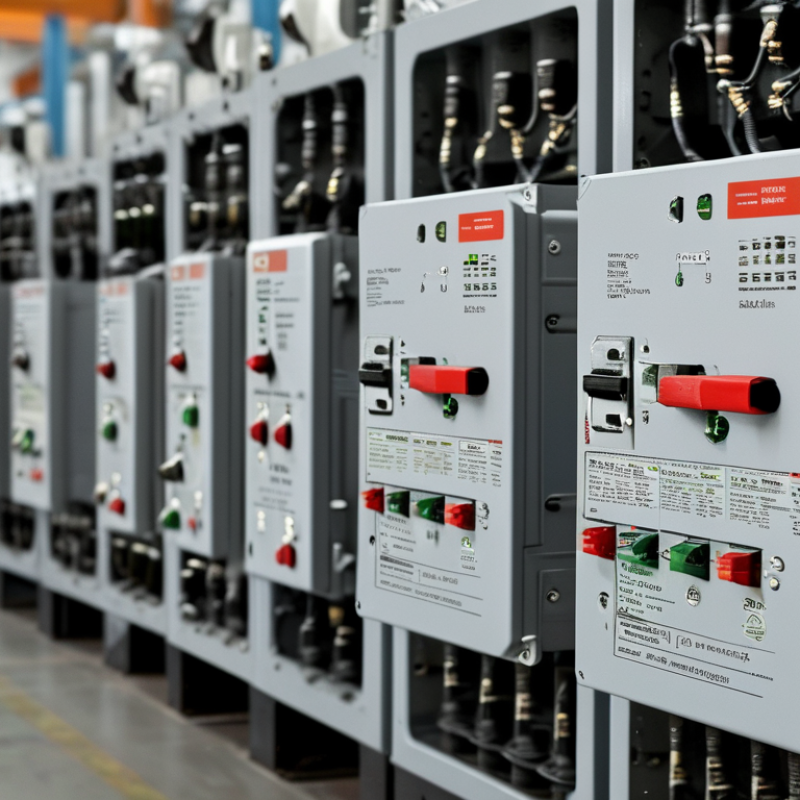
A circuit breaker box is the enclosure that houses circuit breakers, busbars, and protective connections. It receives electrical power and distributes it to separate circuits. When current exceeds a safe level, a breaker trips and interrupts the flow. This action can reduce fire risks, equipment damage, and dangerous overheating. The box also shields live components from dust, accidental contact, and mechanical impact.
For global buyers, manufacturer choice matters because design quality affects safety and service life. A reliable manufacturer should provide clear ratings for voltage, current, short-circuit capacity, enclosure protection, and operating temperature. Product records should include material specifications, wiring diagrams, inspection results, and traceable batch information. Independent testing adds confidence, especially when products must meet regional electrical requirements. Manufacturing consistency matters too. A strong sample is not enough if later production varies. Documentation matters.
Buyers should examine terminal strength, breaker alignment, cover fit, corrosion resistance, and heat performance. They should also ask about installation guidance, spare parts, technical support, and warranty procedures. Price alone misleads. A cheaper box may require extra labor or earlier replacement. Yet no supplier is flawless, and even detailed certificates cannot replace careful site assessment. I would compare verified evidence with actual project conditions, including humidity, available space, expected load, and maintenance access. That step is easy to overlook.
Key Types of Circuit Breaker Boxes for Different Global Applications
Global buyers often compare circuit breaker boxes by application, not appearance. A compact consumer unit suits apartments, shops, and small offices. It normally holds miniature circuit breakers, residual-current protection, and a neutral bar. Transparent labeling windows help maintenance teams identify circuits quickly. Small details matter. A crowded enclosure can make testing slow and unsafe. For export projects, check voltage, frequency, ingress protection, and local certification before ordering. Requirements differ widely between regions, so one catalog description is never enough.
Industrial facilities need stronger distribution boards. A metal-clad box with molded-case breakers handles higher current and demanding loads. It may include busbars, metering, surge protection, and isolation provisions. Motor-control applications often use motor protection breakers and contactor compartments. Heat, dust, vibration, and cable weight influence enclosure selection. I have seen drawings that looked complete but ignored spare capacity. Leaving practical room for future circuits is usually cheaper than rebuilding a panel.
Outdoor and temporary installations require weather-resistant boxes. Look for sealed cable entries, UV-stable materials, drainage design, and suitable IP ratings. Construction sites may favor portable distribution boxes with sockets and residual-current protection. Renewable-energy systems can require dedicated DC boxes, string fuses, and switching devices rated for direct current. Automatic transfer boxes serve backup power systems, but their controls need careful coordination. The difficult part is not choosing a type. It is matching protection settings, fault levels, conductor sizes, and service access to the actual site. Product data must be checked by qualified engineers, and mistakes deserve review before shipment.
How to Evaluate Circuit Breaker Box Manufacturers and Product Quality
Evaluating circuit breaker box manufacturers requires more than comparing price lists. A credible supplier should explain enclosure materials, busbar ratings, breaker compatibility, and temperature limits in plain language. Ask for test reports, production records, and traceability for critical components. Vague answers are a warning sign. They may indicate weak process control or limited engineering support. Inspect sample boxes closely. Look for even seams, secure terminals, clear labels, and covers that close without force. Small details matter during installation.
Product quality should be checked through evidence, not attractive photographs. Review tests for insulation resistance, dielectric strength, heat rise, short-circuit performance, and ingress protection where relevant. Confirm that testing matches the intended market and installation environment. A factory audit can reveal storage problems, poor crimping tools, or inconsistent torque control. Request a pilot batch before placing a large order. Measure dimensions, terminal temperature, and labeling accuracy on received units. Independent inspection is useful, though it cannot replace technical judgment.
Reliable manufacturers maintain controlled drawings, revision histories, and complaint records. They should provide installation guidance and respond with specific corrective actions. Ask how they handle component substitutions. This matters. A cheaper substitute may alter heat performance or fault protection. Delivery history, spare-part access, and after-sales communication also deserve attention. No evaluation is perfect. A supplier may pass one audit and still miss a recurring defect. Recheck samples after design changes, and document every decision. That habit makes quality measurable rather than assumed.
Leading Circuit Breaker Box Manufacturers by Market and Specialty
Global buyers are selecting circuit breaker box manufacturers by market fit, not by catalog size alone. Asia-Pacific remains a major growth center, supported by industrial expansion and urban electrification. MarketsandMarkets’ 2024 circuit breaker analysis identifies this region as a leading market for future demand. Local manufacturers often provide compact enclosures, flexible busbar layouts, and faster project adaptation.
European suppliers usually emphasize energy efficiency, modularity, and documented conformity. These features matter in renovation projects with limited wall space.
North American manufacturers commonly focus on residential load centers, commercial distribution panels, and strong field-service networks.
The International Energy Agency reported nearly 510 GW of renewable capacity additions in 2023. That growth increases demand for panels that can manage distributed generation and storage.
Specialty separates serious manufacturers from general fabricators. Outdoor projects need UV-resistant, corrosion-resistant boxes with reliable sealing. Industrial buyers may require heat control, higher fault ratings, and clear maintenance access. Smart distribution boxes add monitoring, remote alerts, and space for communication modules. The details matter.
However, regional labels can mislead. A factory serving one climate may perform poorly in another. Buyer audits should review test reports, material traceability, enclosure ratings, and production records. TÜV and IEC-based testing can strengthen confidence, but paperwork alone cannot replace inspection. I have seen attractive specifications hide crowded wiring space. That assumption can fail. Manufacturers should also disclose weaknesses, including lead-time risks and limited customization capacity.
International Purchasing, Compliance, and Supplier Selection Considerations
Top Circuit Breaker Box Manufacturers for Global Buyers
International Purchasing, Compliance, and Supplier Selection Considerations
International buyers should assess circuit breaker box manufacturers through documented compliance, not attractive catalogs alone. Ask for factory test reports, material certificates, and production inspection records. Relevant standards may include IEC 61439 and IEC 60947-2, depending on the assembly and market. Local requirements can also change the documentation needed for import clearance.
Specify rated voltage, current, short-circuit capacity, enclosure material, and IP protection before requesting quotations. A metal box may suit an industrial site, while a flame-retardant polymer enclosure may fit a controlled indoor installation. Check busbar spacing, terminal design, cable entry, and thermal performance. Small details matter.
Supplier evaluation needs practical verification. Request samples, approved drawings, quality-control procedures, and traceability for breakers and copper components. Confirm whether the supplier can provide labels, manuals, and test documents in the destination language. Review lead times, packaging, spare parts, and after-sales response in writing. A low unit price can hide expensive redesign work.
Do not trust certificates blindly. Verify issuing bodies and match certificate details with the exact model. A spreadsheet can look complete while missing a critical regional requirement. I have seen purchasing teams focus heavily on price and overlook installation conditions. That approach needs reconsideration. Factory audits, independent inspections, and pilot orders reduce uncertainty, although they cannot remove every supply-chain risk.


