Blog
Top Anti Corrosion Traffic Bollard Manufacturers
Choosing the right Anti-corrosion Traffic Bollard manufacturer requires more than comparing prices. These products protect entrances, loading areas, sidewalks, and restricted vehicle zones. Their performance depends on steel quality, coating systems, drainage design, impact resistance, and installation support.
This guide examines leading manufacturers through practical criteria. It considers material selection, galvanizing methods, powder coating durability, welding quality, and documented testing. Reliable suppliers should explain how their bollards perform in rain, road salt, dust, and repeated vehicle contact. Clear product drawings matter too. So do load ratings, maintenance instructions, warranty terms, and replacement-part availability.
Site conditions change everything.
A coastal facility may need stronger corrosion protection than an inland warehouse. A busy retail entrance may require removable or automatic bollards. Poor anchoring can weaken even a well-made product. That detail is often overlooked. It should not be.
The manufacturers discussed here are assessed from an informed, application-focused perspective. Their industry experience, technical documentation, production consistency, and customer support all deserve attention. Independent certifications and test records can add confidence, but paperwork alone cannot prove field performance. Actual installations, inspection routines, and user feedback remain valuable evidence.
No single manufacturer fits every project. Budget pressure may also influence the final decision. Still, selecting the cheapest option can create higher repair costs later. A careful comparison helps buyers balance protection, appearance, service life, and total ownership cost. This overview aims to support that process with clear, realistic guidance. Some product claims may require further verification before purchase. That is a limitation worth remembering.
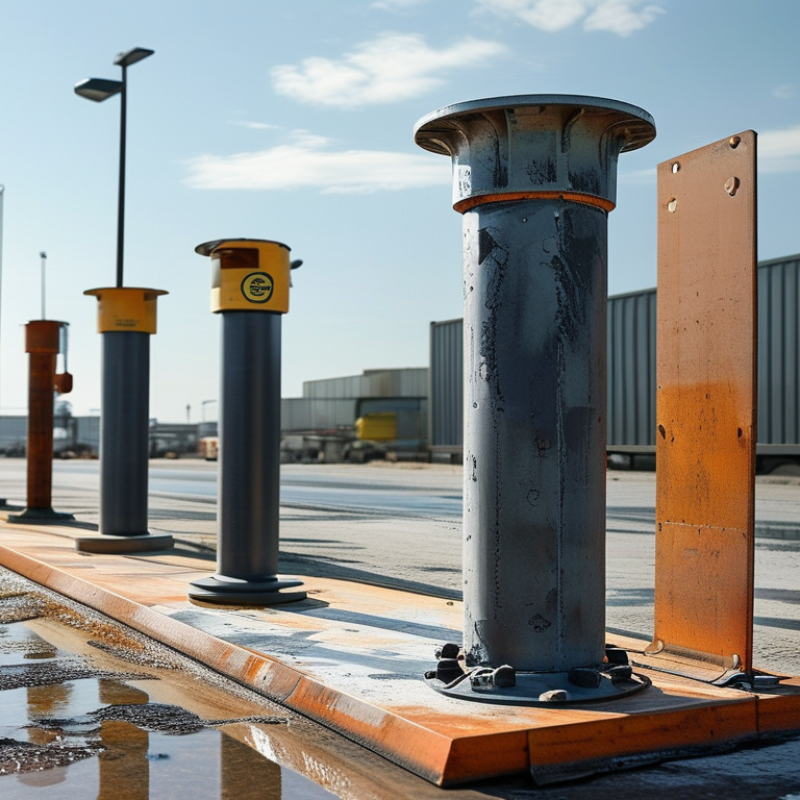
What Are Anti-Corrosion Traffic Bollards?
Anti-corrosion traffic bollards are protective posts designed to control vehicles while resisting rust and surface damage. They are commonly installed near sidewalks, entrances, parking areas, warehouses, and public pathways. Their steel cores provide impact resistance, while galvanized coatings, stainless steel, or durable powder finishes help protect against rain, road salt, humidity, and grit.
A well-designed bollard usually includes sealed joints, proper drainage, and a stable anchor system. Reflective bands or high-visibility colors improve recognition during darkness and heavy rain. Material selection depends on the environment. Coastal locations may require stronger corrosion protection than dry inland sites. However, no bollard is maintenance-free. Small coating scratches can expose metal, and trapped water may accelerate rust from inside. This detail is often overlooked.
Tips: Inspect the base, welds, and coating every few months. Remove dirt before it holds moisture against the surface. Touch up damaged areas with a compatible protective coating. Check for loose anchors after impacts or ground movement. Choosing the thickest post is not always best; drainage, installation quality, and local exposure matter too. Ask manufacturers for coating specifications, material grades, and test information rather than relying on appearance alone. Testing may not perfectly represent every site, but it provides useful evidence for comparison.
Key Materials and Protective Technologies
Top Anti Corrosion Traffic Bollard Manufacturers
Key Materials and Protective Technologies
Reliable traffic bollards begin with material selection, not decoration. Stainless steel offers strong corrosion resistance in coastal streets, parking areas, and industrial entrances. Grade selection still matters because salt exposure can defeat unsuitable steel. Galvanized carbon steel provides practical strength and a zinc barrier. It often suits large roadside projects with controlled budgets.
Aluminum is lightweight and naturally forms a protective oxide layer. However, softer alloys may dent under repeated vehicle contact. Manufacturers should match alloy performance with the site’s impact risk. Recycled content can support sustainability, but quality testing must remain visible. A low-cost material is not automatically economical.
The best protection usually combines several methods. Hot-dip galvanizing protects exposed steel, while powder coating adds color and another moisture barrier. Zinc-rich primers can improve defense around welds, edges, and drilled holes. Internal drainage prevents trapped water from accelerating hidden rust. Sealed caps help, although poor installation can still create weak points.
I have seen coated bollards fail where installers scratched the surface during transport. Small damage matters. Careful inspection, touch-up procedures, and documented coating thickness improve reliability. Salt-spray testing offers useful evidence, but it cannot reproduce every climate. Manufacturers should also report impact testing, weld treatment, maintenance access, and expected service conditions. Honest specifications are more valuable than impressive claims.
| Bollard Material or Construction | Common Protective Technology | Typical Corrosion Resistance | Recommended Environment | Key Technical Advantages | Important Design Considerations |
|---|---|---|---|---|---|
| Carbon Steel | Hot-dip galvanizing, often combined with polyester powder coating | High when correctly specified | Urban streets, parking areas, logistics sites, and general outdoor applications | High structural strength, broad availability, and compatibility with impact-resistant bollard designs | Cut edges, welds, drilled areas, and damaged coatings require proper repair to prevent localized corrosion |
| Hot-Dip Galvanized Steel | Zinc coating applied after steel fabrication; coating performance is commonly specified under ISO 1461 or ASTM A123 | High | Outdoor traffic protection, industrial compounds, and moderately humid environments | Zinc provides barrier protection and sacrificial protection when small areas of steel are exposed | Drainage and vent holes are needed for fabricated hollow sections; white rust may appear during prolonged wet storage |
| Powder-Coated Galvanized Steel | Zinc underlayer plus pretreatment and thermoset powder coating | Very high with proper surface preparation | Public areas where appearance, color coding, and additional moisture protection are required | Provides a decorative finish, additional barrier protection, and a wide range of colors | Adhesion depends on cleaning, conversion treatment, coating thickness, curing, and protection from impact damage |
| 304 Stainless Steel | Mechanical polishing, passivation, or electropolishing | Good | Indoor and standard outdoor environments with low to moderate chloride exposure | Good appearance, easy cleaning, and strong resistance to general atmospheric corrosion | Tea staining and pitting can occur in coastal or salt-contaminated locations; avoid carbon-steel contamination during fabrication |
| 316 Stainless Steel | Passivation, electropolishing, and controlled surface finishing | Very high in chloride-prone settings | Coastal areas, waterfront developments, roads exposed to de-icing salts, and high-maintenance public spaces | Molybdenum content improves resistance to pitting and crevice corrosion compared with 304 stainless steel | It is not immune to corrosion; stagnant water, contaminants, poor weld finishing, and unsuitable fasteners can reduce performance |
| Aluminum Alloy | Anodizing, powder coating, or conversion coating | Good to very high, depending on alloy and finish | Light-duty pedestrian areas, architectural projects, and applications requiring low weight | Low density, natural oxide protection, and good resistance to atmospheric corrosion | Lower strength and impact resistance than many steel designs; galvanic isolation is needed when joined to dissimilar metals |
| Fiber-Reinforced Polymer (FRP) | Resin-rich surface layer, UV stabilizers, and pigmented gel coat | Excellent against rust | Wet, saline, and chemically aggressive environments where metallic corrosion is a major concern | Does not rust, is lightweight, and can provide strong resistance to many salts and chemicals | Impact behavior, fire performance, UV aging, anchorage, and long-term resin durability must be verified for the intended application |
| Steel with Duplex Coating | Hot-dip galvanizing followed by a compatible powder or liquid coating system | Very high | Coastal infrastructure, industrial zones, high-salt roads, and demanding outdoor installations | Combines zinc-based sacrificial protection with an external barrier layer, extending protection after minor surface damage | Requires documented compatibility between galvanizing, pretreatment, coating system, curing process, and repair materials |
How to Evaluate Traffic Bollard Manufacturers
Evaluating traffic bollard manufacturers requires more than comparing steel grades or catalog prices. A credible supplier explains material traceability, weld quality, coating controls, and installation limits.
Ask for material certificates, weld procedures, coating thickness records, and batch numbers. For exposed sites, compare designs against ISO 9223 atmospheric corrosivity categories, from C1 to CX. A coastal loading bay may need a different protection system from an inland parking garage. Field evidence matters. Request photographs of installed bollards after several years, not only factory images.
Testing claims also deserve careful reading. ASTM B117 salt spray testing can compare coating systems, but it cannot directly predict outdoor service life. A responsible manufacturer should disclose surface preparation, zinc thickness, topcoat chemistry, curing controls, and inspection methods. Ask whether impact testing follows a recognized standard and whether anchoring calculations match the actual pavement.
For automatic or removable models, examine cycle testing, drainage, seal replacement, and failure response. A low bid still looks attractive. That is where judgment can slip. Specifications may appear complete, yet omit soil conditions, water exposure, or maintenance access. The strongest evaluation combines laboratory records, independent inspection, clear warranties, and conversations with maintenance teams who use the bollards daily.
Leading Anti-Corrosion Traffic Bollard Manufacturers
Leading anti-corrosion traffic bollard manufacturers design for exposure, impact, and daily maintenance. Their products begin with material selection, not paint color. Hot-dip galvanized steel suits wet roads and parking entrances. Stainless steel helps where salt spray remains constant. Powder coating adds visual protection, but it cannot repair poor surface preparation. Experienced manufacturers specify wall thickness, weld quality, anchoring depth, and drainage details. These choices affect service life. They also test coating adhesion, salt spray resistance, and impact performance under controlled conditions. Test data matters. So does field evidence. Ask for inspection records, batch traceability, and clear replacement procedures.
A reliable manufacturer studies the installation site before recommending a bollard. Coastal air, winter grit, standing water, and cleaning chemicals create different risks. Leading suppliers may offer removable, fixed, or flexible designs for different traffic patterns. They should explain maintenance intervals in plain language. I have found small details can decide performance: sealed welds, capped tubes, and accessible fasteners. Yet no finish lasts forever. That point is often softened in sales material. It should not be. A failed coating can expose steel around a scratch, especially near the base. Manufacturers that acknowledge weak points appear more credible. Buyers should compare real samples, warranty limits, and repair guidance, not only polished photographs.
Applications, Standards, and Maintenance Considerations
Traffic bollards protect loading bays, sidewalks, parking entrances, and sensitive facilities from vehicle movement. Their exposure differs sharply. Coastal roads face salt spray, while urban streets collect grit, exhaust residue, and de-icing chemicals. The NACE IMPACT report estimated global corrosion costs at about US$2.5 trillion annually, equal to 3.4% of global GDP. That figure explains why coating selection deserves engineering attention.
For anti-corrosion performance, specify hot-dip galvanizing under ASTM A123, or a compatible coating system assessed through ISO 12944 corrosion categories. Salt-spray testing under ASTM B117 can compare coatings, but it does not perfectly predict outdoor service life. That limitation matters. Security-rated bollards may also require impact testing under ASTM F3016, PAS 68, or IWA 14-1, depending on the project and local authority. Applications near traffic lanes need both structural resistance and visible marking. Powder coating over zinc can improve appearance, yet damaged edges still need prompt repair.
Tips: Inspect bases, welds, drainage gaps, and fasteners every three to six months. Remove salt deposits with clean water and a soft brush. Do not cover rust with paint alone. Record coating damage with dated photographs. Manufacturers should provide coating thickness, substrate grade, test methods, and repair instructions. Buyers should question vague claims such as “maintenance-free.” Few outdoor products truly deserve that label. A practical specification also considers replacement access, winter cleaning, and the bollard’s installation environment.
Top Anti-Corrosion Traffic Bollard Manufacturers: Applications, Standards, and Maintenance Considerations
This chart summarizes the atmospheric corrosivity categories defined in ISO 9223 using the upper boundary of the annual mass-loss range for low-carbon steel. Traffic bollards installed in coastal, industrial, or heavily polluted environments typically require more durable coating systems, careful detailing, and more frequent inspections. ISO 12944 coating durability classes should be selected together with site exposure, impact risk, drainage, and maintenance access.
Article Source:
Exclusive Access
Unlimited Resources
Detailed information on our products to assist you with the planning of your cable management project
Register Now