What is a Regulated Power Supply and How Does It Work?
A Regulated Power Supply (RPS) is crucial in modern electronics. According to Dr. Emily Carter, an industry expert in power systems, "Consistent voltage and current are key for device reliability." Without an RPS, devices face risks like overheating or malfunctioning. These issues can arise from voltage fluctuations or energy spikes.
Regulated power supplies manage these concerns by ensuring steady, precise voltage delivery. This stability protects sensitive components in devices from damage. Imagine an audio amplifier; without a reliable RPS, sound quality may degrade significantly.
However, understanding RPS isn't always straightforward. Many users may overlook their importance until problems arise. Designing an effective regulated power supply requires careful planning and consideration of various factors. It’s easy to underestimate how much a stable power connection influences performance across countless applications.
What is a Regulated Power Supply?
A regulated power supply is a critical component in electronic devices. It provides a constant voltage output, regardless of input fluctuations or the load changes. This ability to maintain voltage stability is essential for the proper functioning of sensitive equipment. According to industry reports, about 30% of electronic failures stem from power quality issues. This highlights the importance of reliable power supply systems.
In a regulated power supply, feedback mechanisms are fundamental. They monitor the output voltage and adjust the input as necessary. This process ensures consistent power is delivered, which is especially vital in industries like telecommunications and healthcare. A recent study indicated that properly regulated supplies can increase the lifespan of electronic components by up to 50%. However, not all supplies are perfectly designed. Some may exhibit voltage spikes or dropouts, even in seemingly stable conditions.
Power supply design is an area that often requires more scrutiny. Engineers grapple with finding the ideal balance between cost and performance. Many products fail to deliver the expected reliability. Up to 20% of new designs encounter power regulation issues during testing. Thus, continuous improvement and more thorough evaluations during the design phase are crucial for mitigating these challenges.
What is a Regulated Power Supply?
| Parameter | Value | Description |
| Input Voltage | 100-240 V AC | Typical range for AC input |
| Output Voltage | 5, 12, 24 V DC | Common output voltages |
| Output Current | up to 10 A | Maximum current rating |
| Line Regulation | < 1% | Voltage change with input voltage variations |
| Load Regulation | < 2% | Voltage change with load variations |
| Efficiency | > 85% | Ratio of output power to input power |
| Protection Features | Overvoltage, Overcurrent, Short Circuit | Safety mechanisms to prevent damage |
Key Components of a Regulated Power Supply
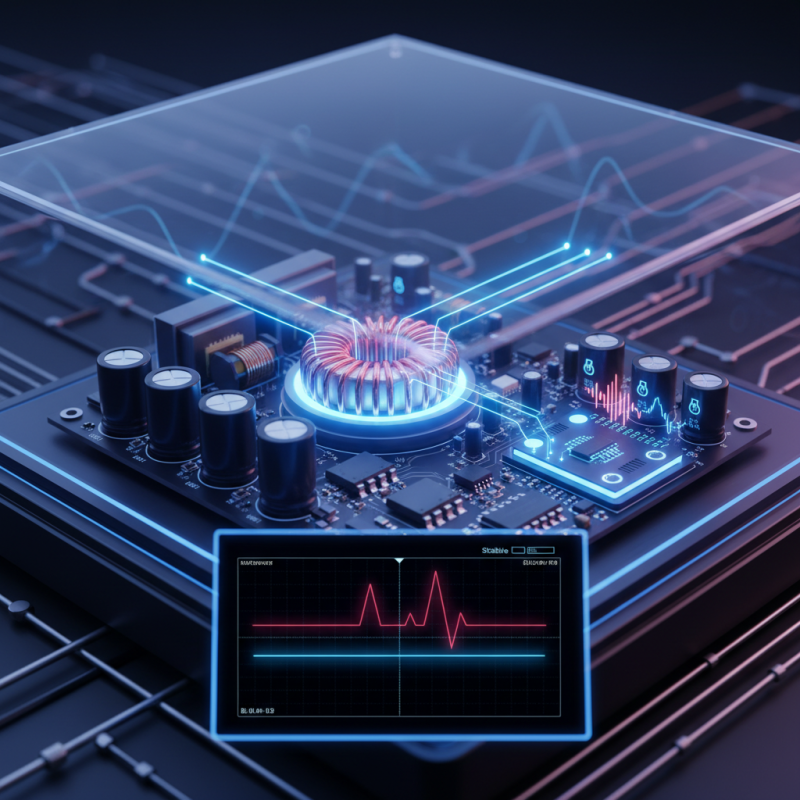
A regulated power supply is essential for many electronic devices. Key components help maintain a constant output voltage. The first main part is the transformer. It steps down the input voltage to a usable level. This component is crucial for converting high voltage into a safer, lower voltage.
Another vital element is the rectifier. It converts alternating current (AC) into direct current (DC). This process is not always perfect. Some ripple voltage may still exist. Filtering capacitors follow the rectifier, smoothing out the output. They reduce fluctuations in voltage but can sometimes fail to eliminate all noise.
Finally, the voltage regulator ensures a stable output. It compensates for any variations in input voltage or load conditions. Without it, devices might experience erratic performance. Relying on these components is tricky. They require careful design and attention to detail. A small design flaw can lead to poor performance or damage. Understanding these key components is vital for effective power supply systems.
Power Supply Voltage Regulation Analysis
How a Regulated Power Supply Works
A regulated power supply is essential for many electronic devices. It ensures a consistent voltage output, critical for proper functioning. This mechanism uses feedback loops to maintain the desired voltage level, despite changes in load or input voltage. A report by the IEEE indicates that a stable power supply can improve device lifespan by 30%.
Inside a regulated power supply, there are often linear or switching regulators. Linear regulators provide a simple solution, but they can waste power as heat. On the other hand, switching regulators are more efficient. They adjust output by rapidly turning the power on and off. According to a study from the International Journal of Electronics, switching power supplies have efficiency rates exceeding 90% in many applications.
However, not all applications suit every type of regulator. Linear regulators may introduce noise, which isn't ideal for sensitive devices. Switching regulators, while efficient, can generate electromagnetic interference. It's crucial to analyze the specific requirements of each application for optimal performance. Striking a balance between efficiency and noise is an ongoing challenge in the industry.
Types of Regulated Power Supplies
Regulated power supplies are essential for many electronic devices. They provide a stable voltage output. This stability is crucial for sensitive components. There are several types of regulated power supplies, each with unique features.
Linear power supplies are one popular type. They use a linear regulator to maintain output voltage. This design is simple but can be inefficient. Excess energy is dissipated as heat. Switching power supplies are another kind. They are more efficient and compact. These supplies switch the input voltage on and off rapidly. This method reduces energy loss, making them more suitable for many applications.
Each type has its drawbacks. Linear supplies might face thermal issues. Switching supplies can introduce noise into the output. Users must assess their specific needs. Choosing the right type is not always clear-cut. Understanding these differences helps in selecting the best option for various projects.
Applications and Importance of Regulated Power Supplies
Regulated power supplies are crucial in many applications. They ensure devices receive stable voltage and current. This stability is especially important in sensitive electronics. Fluctuations can cause damage or malfunction. For instance, medical equipment relies on steady power to operate effectively. A small error could lead to significant issues.
In industrial settings, regulated power supplies help maintain operational efficiency. They provide consistent performance for machinery. When machines receive unstable voltage, they can underperform or fail. This can lead to costly downtimes. A well-regulated system enhances reliability throughout production lines. However, achieving this reliability requires ongoing maintenance and monitoring.
The importance of regulated power supplies extends to consumer electronics. Devices such as smartphones and laptops depend on these systems. Users expect their devices to perform well, regardless of conditions. Yet, not every power supply meets these needs. Some may lack the robustness required in fluctuating environments. This brings up questions about quality and reliability. The choices consumers make affect their experiences directly.