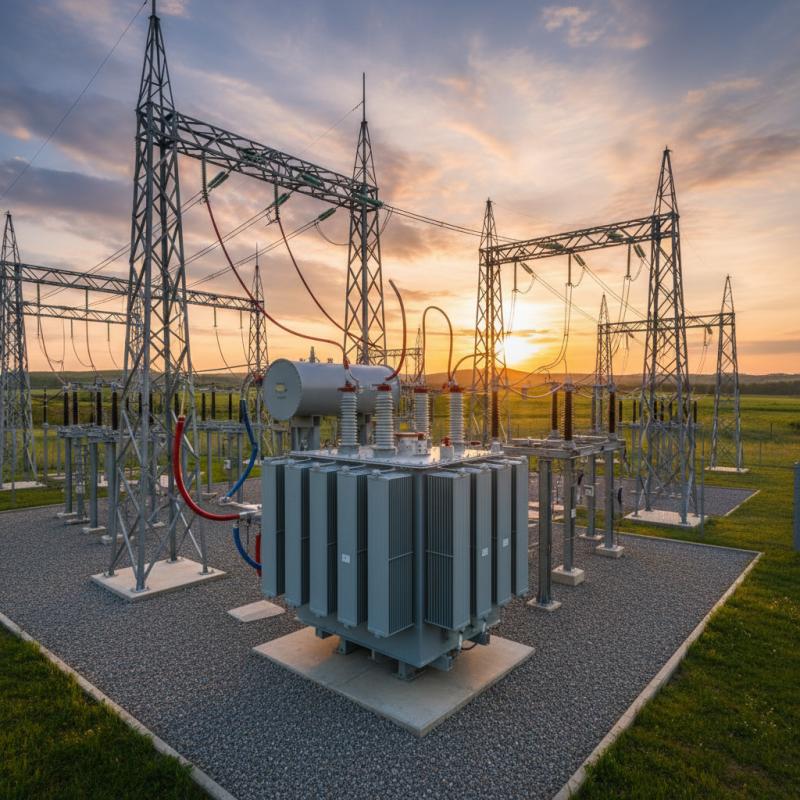
How to Choose the Right Transformer Substation for Your Project?
Choosing the right Transformer Substation is crucial for any electrical project. This decision impacts efficiency, safety, and overall project success. A Transformer Substation plays a vital role in power distribution. It converts voltage levels and ensures reliable electricity flow.
When selecting a Transformer Substation, consider factors like capacity, installation space, and environmental conditions. Accurate assessments of these elements can drive effective choices. Each project has unique demands, requiring tailored solutions.
Challenges can arise during the selection process. Misjudging capacity may lead to overloading or inefficiencies. Insufficient understanding of the environment can result in costly modifications. Therefore, thorough research and expert consultations are essential to mitigate risks. Making informed decisions will boost reliability and performance.
Understanding the Basics of Transformer Substations
Transformer substations play a crucial role in electrical systems. Understanding their basic components is essential for project success. A transformer substation typically includes transformers, switchgear, and protection devices. Each element contributes to efficient energy distribution.
Transformers convert high-voltage electricity to lower voltages suitable for consumer use. They come in various sizes and ratings, depending on the application. Switchgear facilitates control and protection of electrical equipment. It's necessary for safety and reliability. Additionally, protective devices help mitigate faults, ensuring uninterrupted service.
When selecting a substation, consider scalability and future needs. Projects often evolve, so planning ahead can prevent costly modifications. Reflect on local regulations and environmental impacts as well. Your choice influences energy efficiency and reliability. Balancing technical requirements and budget constraints can be challenging, but careful evaluation is key.
Evaluating Project Requirements and Specifications
When selecting a transformer substation, project requirements stand at the forefront. Understanding the specific energy demands is crucial. This includes assessing the total load, the voltage levels, and the expected growth over time. Each of these factors contributes to the overall design of the substation. For instance, a heavy industrial operation will require a different setup than a residential area. Determining the right specifications is not always straightforward.
Evaluating the site conditions is equally important. Factors like soil type, accessibility, and environmental regulations come into play. A site with challenging terrain may require additional investment in infrastructure. Safety standards must be met as well. It’s essential to keep in mind that local codes vary widely. This necessitates a thorough understanding of the area where the substation will be installed.
Finally, consider future scalability. An undersized installation can lead to costly upgrades. Reflecting on these details ensures the substation can grow with the project's evolving needs. Balancing immediate requirements with long-term vision is often challenging but vital for success.
Key Factors in Selecting a Transformer Substation
Choosing the right transformer substation involves several crucial factors. Power demand forecasting is vital. According to the IEEE Power and Energy Society, accurately predicting load requirements can enhance efficiency by up to 30%. This ensures the transformer can handle peak loads without overloading.
Site selection matters too. Proximity to power sources and load centers affects performance. The U.S. Department of Energy highlights that optimal site placement can reduce transmission losses by 10%. Accessibility for maintenance should not be overlooked. Inaccessible sites lead to higher operational costs and longer downtimes.
Financial considerations are equally important. Transformer substations represent significant capital expenditure. A report from the International Energy Agency indicates that lifecycle costs should be analyzed. This includes installation, maintenance, and operating expenses. Balancing upfront costs with long-term savings is challenging but necessary. Always ask questions about warranties and service agreements.
Transformer Substation Selection Criteria
Comparing Different Types of Transformer Substations
When it comes to transformer substations, choosing the right type is crucial. There are several options available, each tailored for specific applications. One common type is the indoor substation. These are compact and ideal for urban areas where space is limited. They typically offer better protection against environmental factors.
Outdoor substations, on the other hand, are designed for larger capacities and can handle higher voltage levels. They are often deployed in industrial and rural settings. The choice between these options depends significantly on space, budget, and intended use. Placement in an area with frequent access issues may lead to higher maintenance costs and challenges.
Considering the technological requirements of your project is essential. Each type of substation requires specific equipment and maintenance practices. It's important to evaluate how changes in energy demands might affect your choice. Seeking input from experienced professionals can help identify the best fit for your needs. This process is not always straightforward, and mistakes can lead to significant setbacks in project timelines.
Assessing Installation and Maintenance Considerations
When selecting a transformer substation, the installation and maintenance aspects are crucial. It's essential to evaluate the site conditions. These include space availability, soil type, and proximity to existing utilities. All these factors affect both installation complexity and ongoing maintenance needs. A well-planned site simplifies installation, leading to lower initial costs.
Maintenance should not be overlooked. Regular inspections and upkeep are vital to ensure the longevity of the transformer substation. Ease of access plays a significant role here. If technicians find it difficult to reach components, it leads to delays and increased costs. Also, consider the surrounding environment. Factors like extreme weather conditions can impact maintenance routines. Reliable maintenance regimes help avoid unscheduled downtimes.
Looking at staff training is equally important. Properly trained personnel can identify issues early, saving time and resources. However, there may be challenges in keeping staff up to date with best practices. This can lead to inconsistencies in maintenance quality. Thus, balancing expertise with accessibility becomes a necessary reflection in your planning process.
How to Choose the Right Transformer Substation for Your Project? - Assessing Installation and Maintenance Considerations
| Criteria | Considerations | Importance Level | Additional Notes |
| Power Rating | Ensure the transformer can handle the expected load. | High | Consider future expansion needs. |
| Location | Evaluate the installation site for accessibility and safety. | Medium | Avoid locations prone to flooding or other environmental hazards. |
| Maintenance Requirements | Consider the ease of maintenance and availability of parts. | High | Choose designs that facilitate regular checks and repairs. |
| Regulatory Compliance | Ensure the transformer meets local and national standards. | High | Check for environmental and safety regulations. |
| Cost | Analyze initial costs versus long-term operational costs. | Medium | Consider total cost of ownership. |
| Type of Transformer | Select between oil-filled, dry-type, and others based on application. | Medium | Oil-filled may require additional regulatory compliance. |