How to Choose the Right Isolation Switch for Your Needs?
Choosing the right Isolation Switch is crucial for both safety and efficiency in electrical systems. An Isolation Switch is designed to disconnect power. This ensures that maintenance can be performed safely. However, selecting the right type can be daunting. Factors like current rating, voltage level, and installation type must be considered.
Many people overlook the importance of using the correct Isolation Switch. Using the wrong one can lead to failures or hazards. It’s vital to understand your specific needs. Not all switches are created equal. Some are better suited for industrial settings, while others work well in residential areas.
Reflecting on your operational needs can illuminate the best choices. Are you using the switch in a dusty environment or a clean one? This can affect your selection. Take time to evaluate all available options. Don’t rush the decision; a thoughtful selection process can save you from costly mistakes.
Understanding the Purpose of an Isolation Switch
Isolation switches play a crucial role in electrical safety and system maintenance. Their primary purpose is to disconnect power from electrical equipment during maintenance. This helps prevent accidents and ensures the safety of technicians. By isolating the circuit, these switches allow for safe inspection and repair without the risk of electric shock.
Choosing the right isolation switch requires understanding your specific needs. Consider the voltage and current ratings that your system demands. Think about the environment where it will be installed. For instance, will it be in a damp area or a dusty one? This can influence the switch's durability and performance. Also, pay attention to the ease of operation. Some switches require more effort to operate than others. This may impact user experience, especially in emergency situations where quick action is crucial.
It's also important to reflect on the switch's placement. An inaccessible switch defeats its purpose. Ensure that you can reach it easily in emergencies. Take time to evaluate different options. Sometimes, the best choice is the one you initially overlooked. Making informed decisions can significantly enhance your safety and operational efficiency.
Isolation Switch Usage Analysis
Identifying Different Types of Isolation Switches
When choosing an isolation switch, it’s crucial to understand the different types available. Isolation switches are designed to disconnect electrical circuits safely. These switches come in various forms, each with unique functions and specifications.
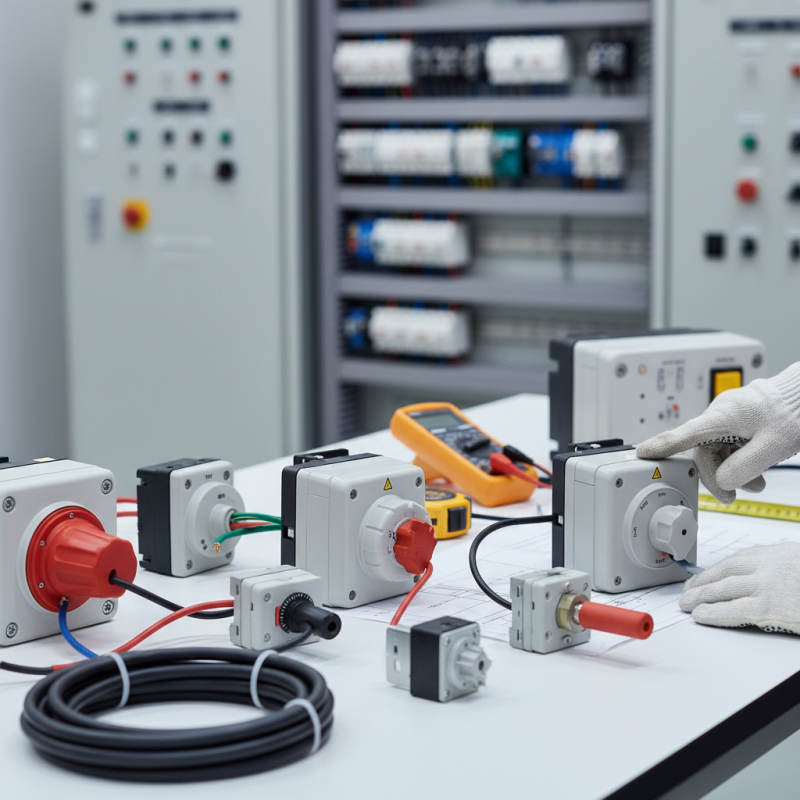
One common type is the rotary isolation switch. It features a simple on/off mechanism, ideal for applications requiring straightforward control. Additionally, there are pull switch variants, which provide a manual operation option. Their design allows for quick disconnection. Another type is the knife switch. This switch offers a visible separation of circuits. It’s useful in situations where clear indicators are needed.
Choosing the right switch isn't always easy. You need to consider factors like voltage rating and installation space. Some switches may not suit high-current applications. Moreover, the location of the switch matters. For instance, outdoor environments require weatherproof options. Lastly, ensure you assess your specific needs. Sometimes, it’s better to consult with a professional to avoid costly mistakes.
Assessing Voltage and Current Ratings for Your Application
Choosing the right isolation switch requires careful consideration of voltage and current ratings. These specifications are critical. They ensure safety and functionality in your application. Overrated switches can lead to equipment failure. Underrated switches may pose safety hazards.
When assessing voltage, check your system's maximum voltage requirements. Ensure the isolation switch can handle this level without issues. For current ratings, determine the continuous load your application demands. A switch must comfortably exceed this load to function effectively.
Remember, it's also essential to consider environmental factors. Temperature variations can impact performance. If possible, consult documentation or industry standards. Sometimes, data is not clear or straightforward. You may need to make judgment calls based on experience. Be prepared to revisit your choices as new information arises.
Evaluating Environmental Factors for Switch Selection
When choosing an isolation switch, environmental factors are crucial. Understanding how switches perform in different conditions can significantly influence your decision. For instance, harsh environments like extreme temperatures or high humidity require switches that can withstand these stresses. According to a report by the International Electrotechnical Commission, switches must meet specific environmental ratings, such as IP ratings, to ensure long-term reliability.
Tips: Always check the IP rating. A rating of IP67 indicates the switch can resist dust and immersion in water.
Consider the material as well. Corrosion-resistant materials are vital for coastal areas, where saltwater can cause damage. Aluminum and stainless steel are good options here. A study by the National Electrical Manufacturers Association shows that improper material selection can shorten the life of a switch by up to 50%.
Tips: Evaluate local environmental conditions thoroughly. Do not overlook seemingly minor factors like exposure to chemicals or UV light.
Lastly, review installation locations. The switch should be accessible yet protected from physical damage. If poorly positioned, even the best switch may fail prematurely. Balancing these factors can lead to smarter choices. Ignoring them may lead to costly replacements or operational downtime.
Determining Installation and Maintenance Requirements
When selecting an isolation switch, understanding installation and maintenance requirements is essential. A recent industry report indicates that improper installation can lead to a 30% increase in equipment failure rates. This suggests that careful planning is crucial. Assess your environment. Factors like humidity and ambient temperature can influence switch performance. Ensure that the chosen switch is rated for these conditions.
Maintenance is another vital consideration. Regular inspections are necessary to identify wear and tear. According to the Electrical Safety Foundation, up to 20% of electrical accidents could be avoided with proper maintenance routines. Checking connections, testing functionality, and replacing components when needed can prolong switch life. Many professionals overlook the need for routine checks, which can lead to eventual system failures.
Be mindful of accessibility during installation. It should be easy to reach the switch for inspections. A difficult-to-access switch might be neglected. Leading industry standards recommend incorporating accessibility into the planning phase. Design your setup with maintenance in mind. Balancing these needs is challenging but crucial for operational efficiency.
How to Choose the Right Isolation Switch for Your Needs? - Determining Installation and Maintenance Requirements
| Feature | Specification | Considerations |
| Rated Current | 25A, 63A, 125A | Choose based on anticipated load |
| Voltage Rating | 230V, 400V | Match with system voltage |
| Number of Poles | Single, Double, Three, Four | Based on the application’s configuration |
| Environmental Rating | IP20, IP65 | Consider indoor vs outdoor installation |
| Mounting Type | Panel Mount, Surface Mount | Decide based on location and accessibility |
| Maintenance Requirements | Routine checks every 6-12 months | Plan for easy access during installation |