Blog
How to Choose the Best Lithium Battery Supplier in 2026?
Choosing the best Lithium Battery supplier in 2026 requires more than comparing prices on a spreadsheet. Battery technology is advancing quickly, while supply risks remain difficult to predict. A reliable supplier should demonstrate practical manufacturing experience, stable quality systems, and clear communication. Look for evidence, not attractive promises.
In real sourcing projects, small details often reveal a supplier’s professionalism. Ask about cell chemistry, energy density, cycle-life testing, thermal management, and production capacity. Request recent test reports, traceability records, warranty terms, and relevant safety certifications. A serious supplier should explain how batteries are inspected before shipment. They should also describe quality controls for cells, battery management systems, connectors, and protective enclosures. Factory audits and sample testing can expose differences that brochures hide.
Cost still matters, but the lowest quotation may create expensive problems later. Delayed deliveries, inconsistent capacity, or weak after-sales support can disrupt an entire product launch. Check the supplier’s financial stability, communication speed, replacement process, and experience with similar applications. Customer references are useful, although they should not be accepted without independent verification. No checklist is perfect. I have seen technically strong suppliers struggle with documentation and responsiveness. That weakness deserves honest attention. The right decision balances performance, compliance, scalability, service, and long-term trust. This guide will help buyers ask sharper questions and recognize dependable partners before signing a contract.
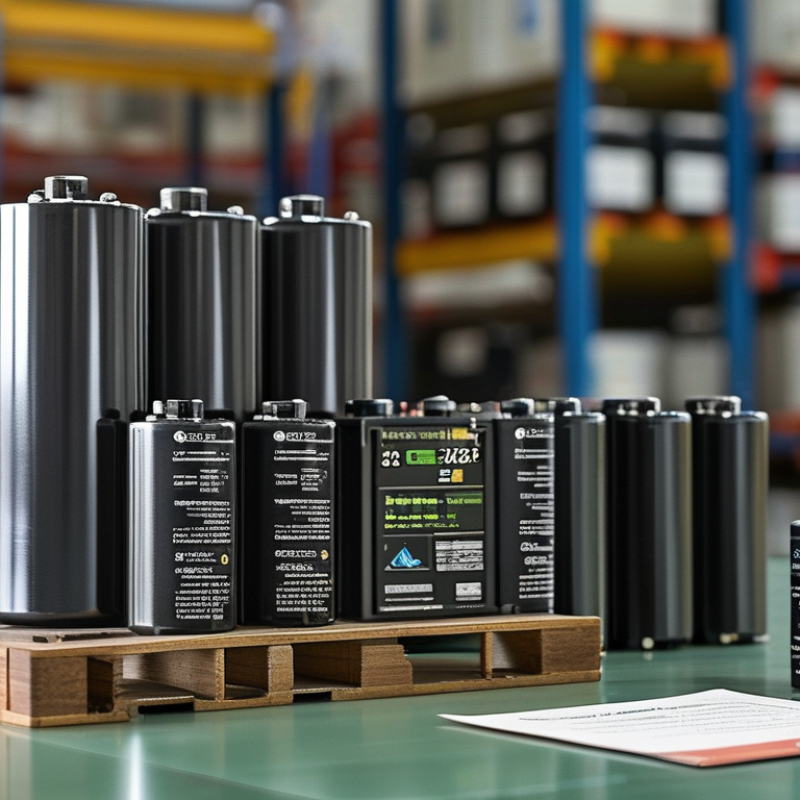
Define Battery Requirements: Voltage, Energy, C-Rate, and 2,000+ Cycle Life
Choosing the best lithium battery supplier in 2026 starts with precise requirements, not attractive pricing.
Define nominal voltage, operating voltage, usable energy, and peak power. A 48 V battery delivering 100 Ah stores about 4.8 kWh before efficiency losses. Confirm the real usable capacity at your temperature and discharge rate. The IEA reported that global electric car sales exceeded 17 million in 2024, increasing pressure on supply quality and traceability.
C-rate deserves careful attention. A 1C discharge empties a battery in roughly one hour; a 2C load demands twice the current. Ask for continuous and peak C-rate data, tested at a stated temperature. Also request cycle-life results using your actual depth of discharge.
“2,000 cycles” means little without conditions. At 80% depth of discharge, 2,000 cycles could deliver approximately 3,200 full-cycle equivalents. BloombergNEF’s 2024 Battery Price Survey reported an average pack price of 115 dollars per kWh, but low cost should never replace verified testing.
Tips: Request independent test reports, production samples, cell traceability, thermal data, and warranty definitions. Check whether capacity means initial or guaranteed capacity. Ask how the supplier handles failed cells. A spreadsheet can still lie. I would also compare ten samples, not one. Small variations often reveal weak process control. Ensure the supplier documents protection limits, balancing methods, storage conditions, and transport compliance. Performance claims without test conditions deserve skepticism.
Compare LFP and NMC: Safety, Energy Density, and $115/kWh Pack Cost
Choosing a lithium battery supplier in 2026 requires more than comparing quotations. LFP chemistry offers strong thermal stability and lower reliance on expensive nickel and cobalt. NMC usually provides higher energy density, which matters when vehicle space or payload is limited. The International Energy Agency reports that LFP batteries have gained market share because of their cost and safety advantages.
Energy density is not the whole decision. A practical LFP pack may deliver roughly 120–180 Wh/kg, while NMC often reaches about 180–280 Wh/kg, depending on cell design. These are working ranges, not guarantees. Ask suppliers for tested figures, not brochure claims. Request cycle-life results at 25°C and high temperatures. Also inspect thermal propagation tests, battery-management records, and warranty conditions.
BloombergNEF reported an average lithium-ion pack price of $115/kWh in 2024. That figure is a useful benchmark, but it is not a fixed purchase price. Pack integration, shipping, certification, software, and after-sales support can raise the final cost. A supplier quoting below $115/kWh may be efficient—or may exclude essential components. I have seen comparisons fail because buyers measured only cell prices. Check traceability, production audits, capacity consistency, and independent test reports before signing. Suppliers should explain chemistry trade-offs plainly. Vague answers are costly.
Audit Supplier Quality: ISO 9001, UN 38.3, IEC 62619, and Traceability
How to Choose the Best Lithium Battery Supplier in 2026?
A reliable supplier should pass a document audit before offering attractive prices. Check whether its ISO 9001 certificate covers the actual battery manufacturing site. Confirm the certification body, validity period, and approved production scope. A certificate alone proves little. Look closer.
Request UN 38.3 test reports for the exact battery model, not a similar product. These reports should identify the cell type, pack design, test laboratory, and revision date. For industrial batteries, review IEC 62619 evidence and inspect protection features, such as temperature monitoring and overcharge controls. Ask how failed samples are handled. Records should match.
Traceability reveals how seriously a supplier manages risk. Each battery should connect to a production batch, cell lot, operator, test result, and shipment record. During an audit, select one finished pack and trace it backward to incoming materials. Then trace the same batch forward to customer deliveries. Request change-control records for cells, firmware, suppliers, and assembly processes. Small changes can create large safety differences.
An on-site visit adds practical evidence. Observe moisture control, torque checks, insulation testing, and quarantine areas for rejected units. Speak with quality staff, not only sales representatives. I would also compare samples from different production dates, because one successful inspection can create false confidence. Suppliers may have gaps. The important question is whether they identify, document, and correct them quickly.
Evaluate Lifecycle Value: Warranty Terms, 80% Capacity, and 2,000+ Cycles
When choosing a lithium battery supplier in 2026, examine lifecycle value, not only the purchase price. A low-cost battery can become expensive after early capacity loss. Ask how the supplier defines 80% remaining capacity. The figure should be measured under stated temperature, discharge rate, and storage conditions. Read every line.
A strong warranty explains coverage, exclusions, testing methods, and claim procedures. It should state whether replacement begins below 80% capacity or after a complete failure. Ask for test reports showing 2,000 or more cycles under realistic operating conditions. Cycle claims can look impressive while using shallow discharges, gentle temperatures, or reduced current. Request independent laboratory results when available. Also check whether the warranty follows the battery, the original buyer, or the installation site. Small print matters.
From practical evaluations, thermal management and charging limits often affect service life more than advertised energy density. Confirm the supplier provides installation guidance, monitoring data, and safe storage instructions. A useful comparison calculates cost per usable cycle, not cost per unit. I would also inspect sample records from field deployments, although those records may not represent every climate. No supplier can promise perfect performance. That uncertainty should be discussed openly. Choose the supplier that explains its assumptions, admits limitations, and supports the battery after delivery.
How to Choose the Best Lithium Battery Supplier in 2026? – Evaluate Lifecycle Value: Warranty Terms, 80% Capacity, and 2,000+ Cycles
| Evaluation Dimension | Minimum Acceptable Level | Preferred 2026 Benchmark | Evidence to Request | Lifecycle Value Impact |
|---|---|---|---|---|
| Warranty duration | At least 5 years | 8–10 years for stationary storage; 5–8 years for commercial mobility | Written warranty certificate, exclusions, claim process, and response times | A longer, clearly defined warranty can reduce replacement and downtime risk. |
| End-of-warranty capacity | At least 70% of original usable capacity | At least 80% of original usable capacity | Capacity-retention curve, test conditions, ambient-temperature limits, and warranty measurement method | An 80% guarantee preserves more usable energy before replacement is required. |
| Cycle-life rating | At least 2,000 cycles | 2,000–6,000+ cycles, depending on chemistry and operating conditions | Independent test report stating depth of discharge, charge rate, temperature, and end-of-life threshold | Higher verified cycle life generally lowers the cost per delivered kWh. |
| Depth of discharge used for rating | 80% DoD clearly stated | 80–90% DoD with documented thermal and voltage limits | Test protocol, usable-energy calculation, reserve settings, and battery-management-system limits | A realistic DoD rating prevents overstating usable capacity and cycle life. |
| Round-trip efficiency | At least 85% at system level | 90–95% under stated operating conditions | System-level efficiency test, including inverter, cabling, cooling, and standby consumption | Higher efficiency reduces electricity losses throughout the operating life. |
| Operating temperature | Charging and discharging limits specified | Charging protection below 0°C and controlled operation up to approximately 45°C | Temperature derating table, heating or cooling strategy, and thermal-event protection data | Effective thermal management helps protect capacity, safety, and warranty compliance. |
| Cell chemistry and safety design | Chemistry disclosed; protective BMS included | Application-matched chemistry with multi-level monitoring and fault isolation | Safety test reports, BMS architecture, propagation controls, and installation requirements | Appropriate chemistry and layered protection reduce operational and insurance risk. |
| Quality and compliance documentation | Traceable production and applicable transport documentation | Batch traceability, documented quality controls, and region-specific certifications | Factory audit records, serial-number traceability, quality certificates, and transport test documentation | Reliable documentation supports compliance, recalls, maintenance, and resale value. |
| Service and replacement support | Remote technical support and spare-parts process | Defined service-level agreement, local support coverage, and replaceable modules | Service-level agreement, escalation contacts, spare-parts availability, and average resolution time | Faster repair reduces lost production and unplanned operating costs. |
| Lifecycle cost calculation | Compare purchase price only as a secondary metric | Use cost per delivered kWh over the warranted service life | Request assumptions for usable kWh, efficiency, cycle count, degradation, maintenance, and replacement | Recommended formula: Total lifecycle cost ÷ lifetime delivered energy. |
Stress-Test Supply Risk: IEA’s Sixfold 2030 Demand Growth and Lead Times
How to Choose the Best Lithium Battery Supplier in 2026?
Supply risk deserves more attention than unit price. The International Energy Agency projects lithium-ion battery demand could grow roughly sixfold by 2030, driven by electric mobility and grid storage. This growth will pressure lithium chemicals, cathode materials, cells, and shipping capacity. The IEA also reports that new mines often need more than 16 years from discovery to production. A supplier promising delivery in eight weeks may still depend on fragile upstream contracts.
Ask for evidence, not confidence. Request twelve months of on-time delivery records, production capacity by site, and documented safety test results. Check whether the supplier has qualified secondary material sources. Compare quoted lead times with actual historical performance. Add inspection points before shipment. Small details matter, such as humidity controls, cell matching, packaging standards, and response time after a rejected batch.
The IEA’s Global Critical Minerals Outlook shows continued concentration in mineral processing, creating exposure to policy changes, outages, and transport disruption. Build a stress test using a 30-day port delay, a 20% material price increase, and a sudden demand spike. Then ask the supplier to explain its allocation rules.
Some answers will sound polished but remain unverified. That is where my own assessment can fail: a factory visit shows capability, not necessarily priority during a shortage. Use audited documents, reference checks, and contractual remedies before treating capacity as reliable.
Article Source:
Exclusive Access
Unlimited Resources
Detailed information on our products to assist you with the planning of your cable management project
Register Now