Blog
10 Best H Beam Manufacturers for Global Buyers
Choosing among the 10 Best H Beam Manufacturers for Global Buyers requires more than comparing prices. H beams carry demanding structural loads in warehouses, bridges, industrial platforms, and high-rise frames. A reliable supplier must control steel chemistry, rolling accuracy, welding quality, and dimensional tolerances. Mill certificates matter. So do production records, inspection methods, and export experience.
Quality expert W. Edwards Deming offered a useful warning: “Quality comes not from inspection, but from the improvement of the production process.” This principle applies directly to H Beam Manufacturers. A final inspection may detect a flawed flange, but consistent process control helps prevent it. Buyers should examine yield strength, tensile strength, beam weight, surface condition, and length accuracy. They should also confirm whether testing follows recognized standards, such as ASTM, EN, or JIS requirements.
Details often reveal more than polished brochures. Ask for recent test certificates. Check heat numbers against shipment documents. Review photos of storage yards and loading procedures. Confirm whether beams are protected from rain, mud, and impact during transport. These steps appear simple. They are not always followed.
This guide evaluates manufacturers through practical criteria, including product range, factory capability, certifications, customization, delivery reliability, and communication. No ranking is perfect. Market conditions change, and even experienced suppliers can face delays or quality disputes. That uncertainty deserves attention. The strongest H Beam Manufacturers are not merely large companies; they are transparent partners that document performance and respond responsibly when something goes wrong.
What H Beams Are and Why Global Buyers Use Them
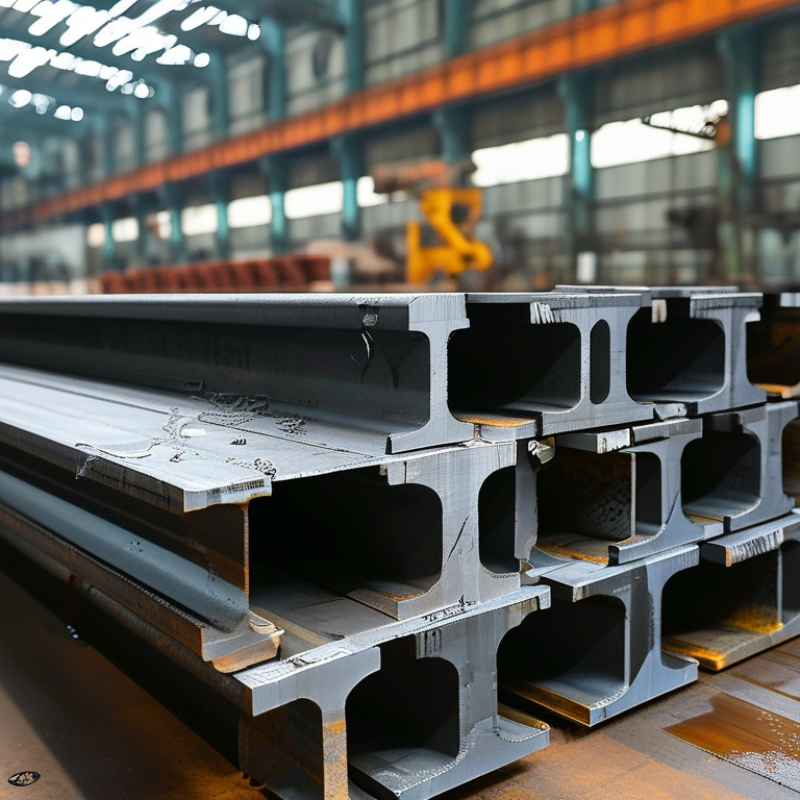
H beams are structural steel sections with wide flanges and a vertical web. Their profile resembles the letter H, but performance depends on exact dimensions, steel grade, and manufacturing tolerance. The flanges resist bending, while the web carries shear between them. Standards such as EN 10365 and ASTM A6/A6M define common dimensions, tolerances, and inspection requirements. Buyers should still check mill certificates, ultrasonic testing, and actual section measurements.
Global buyers use H beams because they provide high load capacity with relatively efficient steel consumption. They suit warehouses, bridges, industrial platforms, high-rise frames, and heavy equipment supports. According to the World Steel Association’s World Steel in Figures 2024, global crude steel production reached about 1.89 billion tonnes in 2023. This scale supports broad supply networks, but it does not guarantee consistent quality. A low quoted price may hide longer lead times, weaker traceability, or costly port handling.
Designers also compare weight, span, connection details, corrosion exposure, and local construction codes. The International Energy Agency reports that steel production creates roughly 7% to 9% of global energy-related carbon emissions. Therefore, choosing a lighter section can reduce material use, but only when structural safety remains proven. Bigger is not always better. In practice, buyers sometimes focus too much on price per tonne and overlook cutting waste, coating needs, and replacement risk. That decision deserves a second review.
10 Best H Beam Manufacturers for Global Buyers: What H Beams Are and Why Global Buyers Use Them
H beams are structural steel profiles with wide flanges and a vertical web, providing high load-bearing capacity and efficient resistance to bending. This chart compares the approximate theoretical mass per metre of commonly used HEA and HEB sections under the EN 10365 European structural steel profile standard. HEB sections are heavier than HEA sections of the same nominal depth because they use thicker webs and flanges.
Key Criteria for Evaluating H Beam Manufacturers
10 Best H Beam Manufacturers for Global Buyers
Key Criteria for Evaluating H Beam Manufacturers
Global buyers should judge H beam manufacturers by evidence, not polished brochures. The World Steel Association reported global crude steel production of 1,888.2 million tonnes in 2023. That scale creates choice, but it also increases quality variation.
Start with dimensional control. Check flange width, web thickness, mass per metre, straightness, and corner geometry. Require test certificates linked to each heat number. Certificates should show chemical composition, yield strength, tensile strength, elongation, and impact results. Standards such as ASTM A6/A6M and EN 10025 provide useful reference points. Third-party inspection can verify sampling and loading conditions. Small gaps matter.
A reliable supplier should explain its rolling process and corrective-action records. ISO 9001 certification supports process discipline, but it does not guarantee every beam is perfect. I have seen buyers overvalue certificates and undervalue traceability. That mistake is expensive. Ask for production capacity, delivery history, export packaging details, and moisture protection during storage. Confirm whether the mill can maintain tolerances across large batches. The International Energy Agency estimates steelmaking produces about 7% of global energy-related emissions. Therefore, request energy, emissions, recycled-content, or environmental-product data when available. Transparent answers usually reveal more than attractive pricing.
Leading H Beam Manufacturers for International Sourcing
For international buyers, the ten best H beam manufacturers are not selected by catalog size alone. Reliable suppliers provide traceable steel grades, clear mill certificates, and stable production records. Their factories should explain rolling tolerances, welding standards, surface treatment, and available section sizes. Experienced manufacturers also understand export packaging. They protect beams from moisture, edge damage, and shifting during ocean transport.
A capable supplier responds with precise documents, not vague promises. Ask for recent inspection reports, production photos, dimensional data, and references from comparable projects. Independent inspection can verify flange width, web thickness, straightness, and chemical composition before shipment. Delivery planning matters too. Confirm lead times, container loading methods, port access, and replacement procedures for damaged materials. Small details often expose weak systems.
No supplier is perfect. A factory may offer excellent steel but limited customization. Another may communicate well yet struggle during peak demand. This is where careful comparison becomes necessary. In my sourcing experience, the strongest manufacturers admit limitations and propose workable alternatives. Buyers should record every specification in the purchase contract. Trust matters, but measurable evidence matters more. A low price can look attractive until delays, rework, or unsuitable certification increase the final cost.
How to Compare Quality, Pricing, and Production Capacity
For global buyers, comparing H-beam manufacturers starts with evidence, not a polished catalog. Ask for mill certificates, heat numbers, dimensional inspection reports, and recent tensile-test results. Check flange width, web thickness, straightness, and surface defects against the required standard. A reliable supplier explains tolerances clearly. Vague promises deserve caution. During procurement reviews, request samples from different production lots. One perfect sample proves little.
Price per ton can hide important costs. Compare steel grade, section size, coating, cutting, packaging, inland delivery, ocean freight, and insurance. Ask whether the quoted weight is theoretical or actual. A low offer may reflect thinner sections, longer lead times, or weaker packing. Build a landed-cost table with currency, payment terms, minimum order, and replacement conditions. Keep room for uncertainty. Freight prices change, and port delays are not always predictable. I have seen precise spreadsheets miss one lifting charge.
Production capacity needs practical verification. Request monthly output records, rolling-mill details, quality-control staffing, stock levels, and realistic lead times. An independent inspection can confirm dimensions, markings, and loading procedures before shipment. Ask how the mill handles repeat orders or sudden volume increases. Capacity claims can mislead. A smaller, transparent producer may outperform a larger supplier with poor records. This comparison is not always comfortable, especially when price pressure encourages shortcuts. Still, traceable documents and consistent test results provide stronger purchasing confidence than promises alone.
Export, Certification, and Supplier Selection Considerations
When comparing H-beam manufacturers, export capability deserves the same attention as steel quality. A reliable supplier should provide mill test certificates for every production batch. These documents normally show chemical composition, tensile strength, yield strength, and heat numbers. Ask whether the certificates match the required standard, such as ASTM A6 or EN 10025. Do not accept a generic certificate for a large, mixed shipment.
Traceability matters.
Experienced buyers also check dimensional tolerance before placing a large order. Request sample inspection records, section measurements, surface photographs, and packing details.
For overseas delivery, confirm bundle weight, lifting points, rust protection, and container loading plans. A small mistake in bundle dimensions can increase freight costs or cause unloading problems at the destination port.
Independent inspection is useful when the order is valuable or the supplier is unfamiliar.
Supplier selection involves more than the lowest quotation. Review production capacity, export history, payment terms, lead time, and response quality. Check whether the company can prepare commercial invoices, packing lists, certificates of origin, and customs documents correctly. Clarify the applicable Incoterm in writing. FCA, FOB, and CIF create different responsibilities and risks. Quality certifications can support confidence, but they do not replace product inspection. That lesson is easy to overlook. A supplier may have impressive paperwork yet weak communication during delays. Ask practical questions, record the answers, and test the process with a smaller shipment when possible. Mistakes still happen, so leave time for port congestion and document corrections.
Article Source:
Exclusive Access
Unlimited Resources
Detailed information on our products to assist you with the planning of your cable management project
Register Now