Main menu Open search

Blog

2026 Best Pallet Conveyor Systems Buying Guide

Choosing the right Pallet Conveyor system in 2026 requires more than comparing prices or motor ratings. It requires a clear view of your warehouse, products, people, and future workload. A conveyor that moves heavy pallets smoothly today may struggle when loads become taller, faster, or less uniform. Small details matter. Forklift access, floor conditions, pallet quality, and transfer spacing can change the entire design.

This buying guide examines roller conveyors, chain conveyors, accumulation zones, transfers, sensors, controls, and safety features. It also considers load capacity, pallet dimensions, line speed, noise, energy use, maintenance access, and total ownership cost. For example, a 1,000-kilogram pallet needs more than a strong frame. It needs suitable rollers, reliable bearings, stable transfers, and properly selected drive components. Clear supplier drawings and performance data should support every major decision. Experienced integrators can also identify bottlenecks that product brochures often hide.

No system fits every warehouse.

A practical evaluation should include site measurements, peak-season demand, operator movement, and planned expansion. Ask how quickly worn rollers can be replaced. Check whether controls can connect with your warehouse management system. Review guarding, emergency stops, inspection routines, and available technical support. Some recommendations in this guide remain conditional because real facilities are rarely perfect. Pallets arrive damaged. Layouts change. Budgets tighten. That is why this 2026 guide balances technical performance with operational reality, helping buyers select dependable equipment without overlooking the problems that appear after installation.
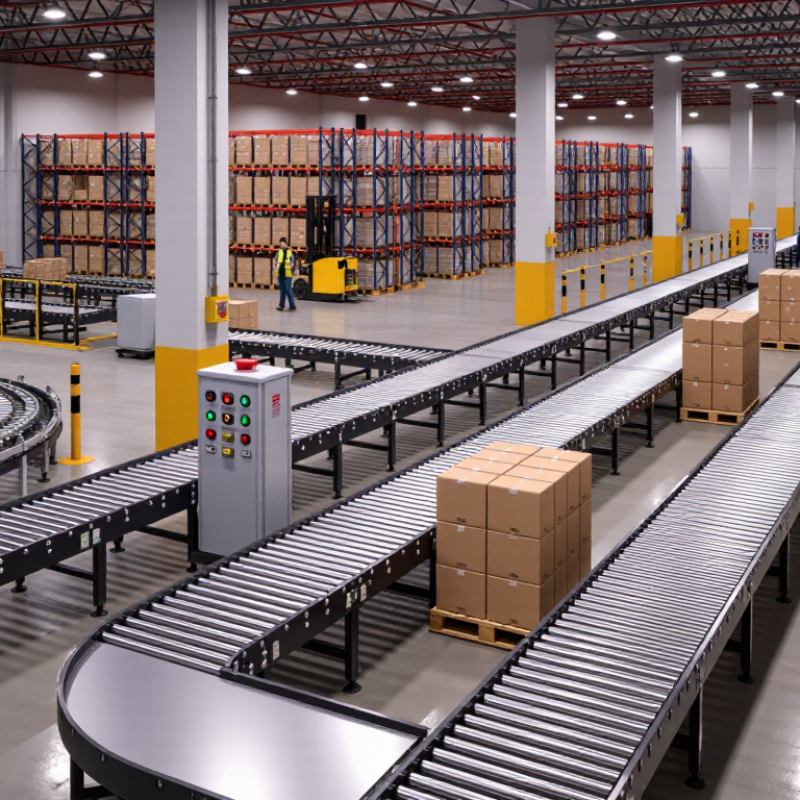
2026 Best Pallet Conveyor Systems Buying Guide

Understanding Pallet Conveyor Systems and Their Main Configurations

Pallet conveyor systems move heavy loads between receiving, storage, production, and shipping areas. Their main configurations include roller conveyors, chain conveyors, and pallet turntables. Powered roller conveyors suit standard pallets and continuous flow. Chain conveyors handle uneven bases, wet zones, and heavier loads. Turntables change direction without requiring a large transfer aisle.

Configuration affects speed, safety, and maintenance. MHI’s 2024 Annual Industry Report surveyed more than 1,000 supply chain professionals and reported continued growth in automation investment. That pressure makes pallet flow attractive, but automation is not always the best answer. A simple chain section may outperform a complex system in a low-volume warehouse. CEMA guidance also stresses guarding, load capacity, controls, and emergency stopping. These details deserve careful review.

Tips: Measure the pallet’s weakest condition, not its ideal condition. Check damaged boards, loose wrapping, and uneven loads. Confirm the conveyor’s rated capacity with real pallet weights. Leave access beside drives and sensors. I have seen layouts fail because maintenance space was treated as unused space. Also question the forecast. Peak volume estimates can be wrong, and oversized equipment quietly increases energy and installation costs. Ask for test runs using your actual pallets before approval.

2026 Best Pallet Conveyor Systems Buying Guide - Understanding Pallet Conveyor Systems and Their Main Configurations

Configuration Typical Pallet Load Typical Conveyor Speed Common Conveyor Width Best-Suited Pallet Types Main Advantages Key Buying Considerations
Chain-Driven Roller Conveyor Up to approximately 1,500 kg per pallet, depending on frame, roller, and drive selection. Typically 6–18 m/min for controlled pallet handling. Approximately 800–1,400 mm, with the conveyor sized to support the pallet over multiple rollers. Rigid, flat-bottom pallets with reasonably consistent dimensions.
  • Positive drive for heavy loads.
  • Suitable for accumulation, transfers, and pallet flow lines.
  • Handles moderate dirt and industrial operating conditions.
  • Specify roller pitch so the pallet is supported by at least three rollers.
  • Check chain access, lubrication, guarding, and noise requirements.
  • Use load-rated transfers where pallet direction changes.
Gravity Roller Conveyor Commonly 250–1,000 kg per pallet when the frame and rollers are correctly rated. Non-powered; pallet movement depends on slope, load, and operator control. Approximately 800–1,400 mm. Stable, flat-bottom pallets used for short-distance staging or manual movement.
  • Low purchase and operating cost.
  • No motor, controls, or electrical power required.
  • Simple construction with relatively easy maintenance.
  • Requires controlled gradients and mechanical end stops.
  • Not ideal for automatic accumulation or long conveying distances.
  • Verify pallet underside condition to prevent snagging.
Belt-Driven Roller Conveyor Typically 300–1,000 kg per pallet, subject to belt capacity and roller configuration. Approximately 5–20 m/min. Approximately 800–1,300 mm. Flat-bottom pallets requiring smooth, relatively quiet conveying.
  • Quiet operation compared with many chain-driven designs.
  • Good for controlled starts, stops, and accumulation zones.
  • Provides consistent roller rotation across the conveyor width.
  • Protect belts from oil, sharp debris, and excessive heat.
  • Confirm belt tensioning and replacement access.
  • Check whether the required load creates belt slip during acceleration.
Motorized Roller Conveyor Commonly 300–1,500 kg per pallet, depending on the number and rating of powered rollers. Approximately 5–30 m/min, with variable-speed control available. Approximately 800–1,400 mm. Standardized pallets in automated warehouses, production, and distribution systems.
  • Flexible zoning and precise pallet positioning.
  • Efficient for accumulation because only occupied zones may run.
  • Supports sensors, programmable controls, and system integration.
  • Evaluate motor protection, control architecture, and spare parts.
  • Confirm stopping accuracy for robots, lifts, and palletizers.
  • Provide safe access for sensors, drives, and electrical panels.
Double- or Triple-Strand Chain Conveyor Often selected for approximately 500–2,000 kg per pallet when the load is supported by suitable runners. Typically 4–15 m/min. Approximately 900–1,400 mm overall, depending on strand spacing. Stringer pallets, block pallets with compatible support surfaces, and rigid industrial pallets.
  • Good traction and strong positive movement.
  • Works well for pallet transfer, indexing, and heavy-duty lines.
  • Less sensitive to some pallet underside gaps than roller systems.
  • Match strand spacing to pallet runners and load distribution.
  • Inspect chain wear, sprockets, lubrication, and guarding.
  • Confirm pallet stability during stopping and transverse transfer.
Turntable or Transfer Car Commonly 500–2,000 kg per pallet, based on platform structure and drive capacity. Transfer travel commonly 5–20 m/min; rotation is usually controlled at a slower rate. Platform dimensions are commonly around 1,000–1,500 mm square. Rigid pallets that need a 90-degree, 180-degree, or multi-directional route change.
  • Reduces the need for long conveyor bends.
  • Enables compact layouts and multiple line connections.
  • Can combine roller or chain transport with positioning functions.
  • Check floor flatness, rail alignment, stopping accuracy, and safety zones.
  • Allow sufficient clearance for pallet overhang and load movement.
  • Integrate interlocks to prevent movement when personnel are present.
Lift Table or Vertical Pallet Conveyor Typically 500–2,000 kg per pallet, depending on lift height and duty cycle. Usually 3–10 m/min vertical travel for controlled pallet movement. Platform widths commonly range from 1,000–1,500 mm. Rigid pallets in multi-level warehouses, production areas, and mezzanine systems.
  • Moves pallets between floors without using a long ramp.
  • Can connect multiple conveyor elevations.
  • Suitable for repeated, programmed vertical transfers.
  • Verify lift height, cycle rate, platform capacity, and load center.
  • Require gates, guarding, anti-drop protection, and emergency stops.
  • Coordinate upper- and lower-level conveyor controls carefully.
Pallet Accumulation Conveyor Commonly 500–1,500 kg per pallet, with capacity calculated for the entire accumulation zone. Typically 5–20 m/min, with zero-pressure or minimum-pressure control available. Approximately 900–1,400 mm. Standardized pallets requiring temporary buffering between process steps.
  • Buffers production or shipping variability.
  • Can reduce product contact when zero-pressure accumulation is used.
  • Supports sensors, zone controls, and automated release logic.
  • Define accumulation length, pallet spacing, and release sequence.
  • Confirm that controls prevent pallet collisions and back pressure.
  • Account for pallet quality, load stability, and sensor contamination.
Washdown or Corrosion-Resistant Conveyor Often 300–1,500 kg per pallet, depending on construction and operating environment. Approximately 3–15 m/min for controlled handling in wet or hygienic areas. Approximately 800–1,400 mm. Plastic pallets, stainless-compatible pallets, and loads used in wet-processing areas.
  • Designed for frequent cleaning and exposure to moisture.
  • Can use sealed components and corrosion-resistant structural materials.
  • Helps support hygiene and contamination-control procedures.
  • Specify material compatibility with cleaning chemicals and temperatures.
  • Check drainage, weld quality, seals, and ingress protection ratings.
  • Do not assume a corrosion-resistant frame makes every component washdown-rated.
Modular Pallet Conveyor Line Commonly engineered for 500–1,500 kg per pallet, with each module individually load-rated. Typically 5–25 m/min, depending on process requirements. Approximately 800–1,400 mm, with custom widths available for special pallets. Mixed pallet sizes when the system includes adjustable guides and suitable transfers.
  • Combines straight conveyors, curves, transfers, lifts, and accumulation.
  • Allows staged installation and future expansion.
  • Supports integrated sensors, controls, and warehouse software.
  • Define the complete pallet envelope, including load overhang.
  • Review interfaces between modules, controls, and safety circuits.
  • Request documented throughput, duty cycle, and maintenance requirements.

Assessing Load Requirements, Layouts, and Material Flow Conditions

Choosing the best pallet conveyor system in 2026 starts with the load, not the catalog. Measure the heaviest pallet, average pallet, and weight distribution. Include damaged pallets, uneven cartons, and loads with flexible wrapping. Measure the real load. Engineers should also check pallet dimensions, bottom-board spacing, and surface condition. These details affect roller contact, motor sizing, braking, and transfer reliability.

Layout decisions should follow the movement pattern. A straight conveyor may suit steady shipping lanes, while accumulation zones need controlled spacing and safe release points. Allow access for cleaning, inspections, and forklift traffic. Tight corners can save floor space, but they may create pressure against pallet edges. A digital layout can expose conflicts early, though it cannot replace a site walk. Dust, temperature changes, moisture, and floor slopes often escape the drawing.

Material flow conditions deserve equal attention. Record arrival rates during quiet and peak periods. Compare inbound surges with storage capacity and outbound schedules. Flow matters. If pallets stop frequently, use suitable accumulation logic and verify restart behavior under full load. Manual workstations may require ergonomic heights and clear operator zones. Practical reviews sometimes find that the planned speed is excessive for real handling habits. That is worth challenging before purchase. Test representative pallets, not ideal samples, and document every exception for the final specification.

2026 Best Pallet Conveyor Systems Buying Guide

Assessing load requirements, layouts, and material flow conditions

Typical planning values show how conveyor selection changes with pallet load and material-flow needs. Roller conveyors support heavy unit loads and accumulation, chain conveyors are suitable for stable transfer and heavier pallets, while belt conveyors provide higher continuous-flow speeds but generally accommodate lighter pallet loads. Final specifications should be verified against pallet dimensions, duty cycle, transfers, incline, and required safety margins.

Comparing Conveyor Types, Drive Options, and Control Features

2026 Best Pallet Conveyor Systems Buying Guide

Conveyor selection should begin with the pallet, not the catalog. Roller conveyors suit stable loads and straight routes. Chain conveyors handle uneven pallets and demanding transfers. Accumulation zones protect product flow when downstream equipment stops. For mixed pallet sizes, powered transfers and adjustable guides reduce jams, but they add maintenance points.

Drive choice changes energy use and service access. Motorized rollers provide zone-by-zone control and quieter operation. Geared drives deliver strong torque for heavy pallets and long lines. Variable-frequency drives enable softer starts, which can reduce shifting and frame stress. The right specification depends on pallet weight, hourly throughput, incline, dust, and washdown exposure. A small mistake here becomes expensive.

MHI and Deloitte’s 2024 Annual Industry Report found that 55% of supply-chain respondents planned to increase technology investment. That spending should include controls, not only steel. PLC-based logic, photoelectric sensors, barcode readers, and WMS interfaces improve traceability.

Safety circuits need guarded pinch points, emergency stops, and clear reset procedures. PMMI’s automation research also identifies labor availability and flexible production as major investment drivers.

Still, full automation is not always wiser. I have seen designs overuse sensors and create difficult troubleshooting. Keep diagnostics visible. Test real pallets, damaged boards, and partial loads before approval.

Evaluating Safety, Maintenance, Energy Use, and Total Ownership Costs

2026 Best Pallet Conveyor Systems Buying Guide

When evaluating a pallet conveyor system, safety should come before throughput. Check guarding, emergency stops, load ratings, and access points around transfers. A proper risk assessment should reflect real pallet weights, damaged boards, and uneven loads. Small gaps can create serious pinch hazards. Ask for documented testing, clear operating instructions, and maintenance training. Reliable suppliers should explain safety decisions, not only provide performance figures.

Tips: Walk the proposed route with operators. Watch pallet movement during starts, stops, and transfers. Measure noise, vibration, and clearance. Include cleaning access in the layout. A system that looks efficient on paper may be difficult to service beside storage racks.

Energy use deserves practical measurement. Compare motor efficiency, standby consumption, controls, and operating schedules. Variable-speed operation can reduce waste when demand changes, but it may add control complexity. Maintenance costs include inspections, lubrication, replacement rollers, sensors, and unexpected downtime. Request a realistic spare-parts list and expected service intervals. Calculate total ownership costs over several years, including installation, training, energy, repairs, and lost production. The cheapest quote can become expensive after repeated stoppages. No estimate is perfect. Review assumptions with maintenance staff before approving the design.

Selecting Suppliers and Planning Installation for 2026 Operations

Selecting a pallet conveyor supplier for 2026 operations requires more than comparing purchase prices. Start with verified experience in facilities carrying similar pallet weights, dimensions, and daily volumes. Ask for performance records, installation references, and documented maintenance response times. A supplier should explain load limits clearly. Vague promises create expensive problems later.

Review the full operating plan with the supplier. Measure aisle widths, column locations, floor conditions, pallet flow, and emergency access. Share seasonal volume changes, not only average throughput. The conveyor layout must support receiving, storage, picking, and shipping without creating sharp traffic conflicts. Include controls, sensors, guarding, and operator training in the early design. Small omissions become large delays.

Installation planning deserves its own schedule. Confirm delivery access, staging space, electrical requirements, and shutdown windows before equipment arrives. Coordinate installers with construction, IT, safety, and warehouse supervisors. Test every zone with empty and fully loaded pallets. Check stopping distances, sensor accuracy, noise, and recovery after a power interruption. Do not accept a smooth demonstration alone.

Our early estimates were sometimes too optimistic. Real pallets varied more than the drawings suggested. Build time for adjustments. Require updated drawings, inspection records, spare-parts lists, and maintenance instructions before handover. A practical supplier will welcome difficult questions and record agreed changes. That behavior matters more than polished sales language.

Exclusive Access

Unlimited Resources

Detailed information on our products to assist you with the planning of your cable management project

Register Now

BIM Files

Step Files

Installation Manuals

User Guides

Best Practice Guides

Technical Charts